In this exciting trio in A minor three performers share main motives throughout. Mary Leaf’s signature lyricism shines brightly in this flowing waltz. Develops good listening skills for ensemble precision. Parts are stacked–making coaching easy. Three copies under one cover.
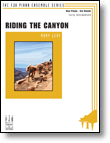
This entertaining trio cheerfully clops along in the key of C major and sets the stage for an exhilarating ride through canyons and winding roads. Mary Leaf’s unique gift of letting each part have the spotlight for a while illustrates her mastery of writing for three players. Students will have an exciting experience and audiences will love it! Parts are stacked–making coaching easy. Three copies needed for study.
George Gershwin's iconic Rhapsody in Blue changed the landscape of American music at its 1924 premiere. Its irresistible fusion of classical and jazz has made it one of the most popular American concert works of all time. For this new edition all available sources at the Library of Congress were consulted, including full scores for piano and orchestra as well as two-piano reductions. This edition includes a second copy of the music, making it ideal for all concerto settings. Historical background and critical notes on the sources provide a fascinating window into Gershwin's composition process.
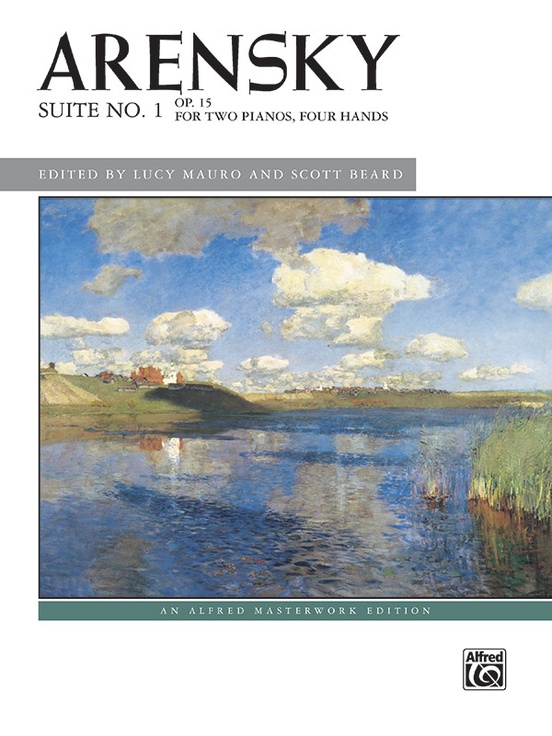
Composed between 1885 and 1888, this suite for two pianos contains three movements that are typical of the 19th-century character piece. The parts for each piano are equal in technical difficulty and melodic material. The second movement, “Valse,” is one of Arensky's best-known works. Two copies are required for performance.
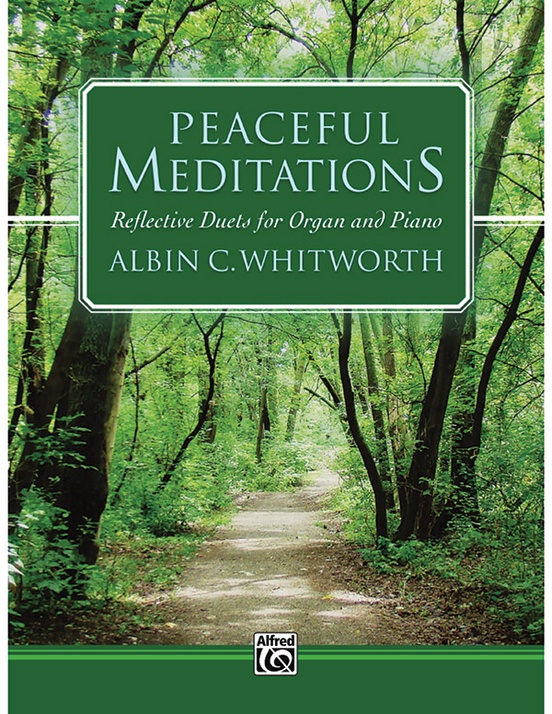
From tender to quietly triumphant, this collection brings fresh settings of favorite hymns that are easily prepared and performed. Titles include:
* Lord, I Want to Be a Christian
* It Is Well with My Soul
* My Faith Looks Up to Thee
* I Am Thine, O Lord
* Spirit of God, Descend Upon My Heart
* His Eye Is On the Sparrow.
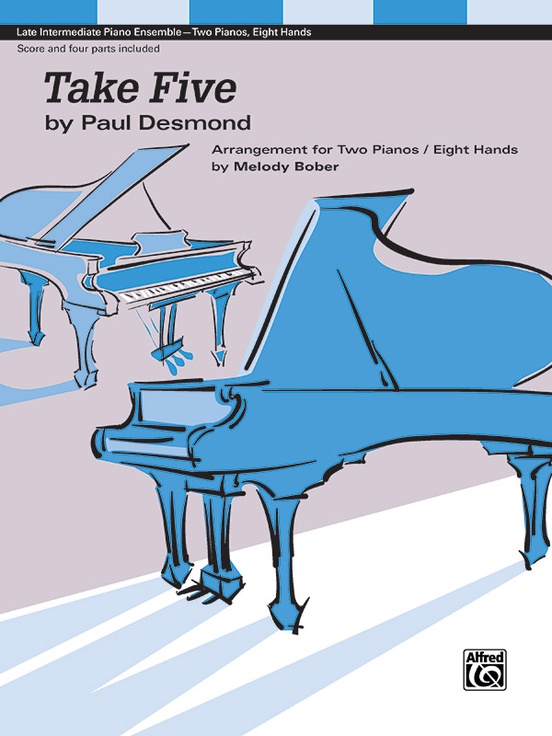
Take Five was written by Paul Desmond, a jazz alto saxophonist, and first recorded by the Dave Brubeck Quintet on the album Time Out. Melody Bober's arrangement for two pianos, eight hands is written for late intermediate pianists and laid out as two duets (Piano 1 and Piano 2) with the primo and secondo parts on facing pages. The arrangement begins in the original key of E-flat minor and modulates to E minor. A favorite of all jazz enthusiasts, it is an excellent choice for recitals, piano ensemble classes, and “monster” concerts.
This is a showstopper duet with an edge of villainy. Performers will execute hilarious physical moves around the piano while playing the main themes. Justin Levitt is at his best with a creative score that is rhythmic with hints of sinister jazz, sure to be lots of fun for students and audiences.
This one piano, four-hand duet is composed in true Ragtime style. The Ragtime melody is played predominantly by the Primo part, while a steady rhythmic Secondo part keeps time. This is an excellent piece for a student-teacher duet in performance, and can introduce your studio to the style of Ragtime.
Dedicated to the students of the Kitsap Music Teachers Association, Kitsap, Washington Once the clock starts ticking, the rhythmic energy of this Latin-infused piece never lets go! A show-stopper for two pianos and eight hands.

The eight movements of Dmitri Shostakovich's Suite No. 2 for Jazz Orchestras are mostly clips from film music from the years 1940 to1956. Especially well-known from this suite is the waltz no. 2, originally a background music in the movie “The First Season” by Mikhail Kalatozov (1956); The waltz is cited in many other films, such as in Stanley Kubrick's “Eyes Wide Shut” of 1999. The arrangements for four-handed piano keep close to the original, the term transcription fits best. The Primo part is technically more demanding than the Secondo Part. (Simon Bishop)