Josef Suk played second violin in the Bohemian String Quartet. Since 1914 the ensemble was obliged to perform the Austrian national anthem at the opening of every concert.
Suk decided to supplement this obligatory piece with a work inspired by the ancient sacred Bohemian “St. Wenceslas” hymn. The hymn’s message – a plea for the well-being of the Czech people, directed at their patron saint – was immediately understood by the audience.
The Bohemian String Quartet performed this single-movement Meditation for the first time on 27 September 1914; the premiere of the version for string orchestra followed on 22 November 1914, played by the Czech Philharmonic. That same year the piece was published by Fr. A. Urbánek together with arrangements for piano and organ.
This first Urtext edition, prepared by the Suk scholar Zdenek Nouza, is published in two scorings, one for string quartet (BA 9583; study score TP 583) and another for string orchestra (BA 9584).
The orchestral version differs in some details and has an added part for double bass.
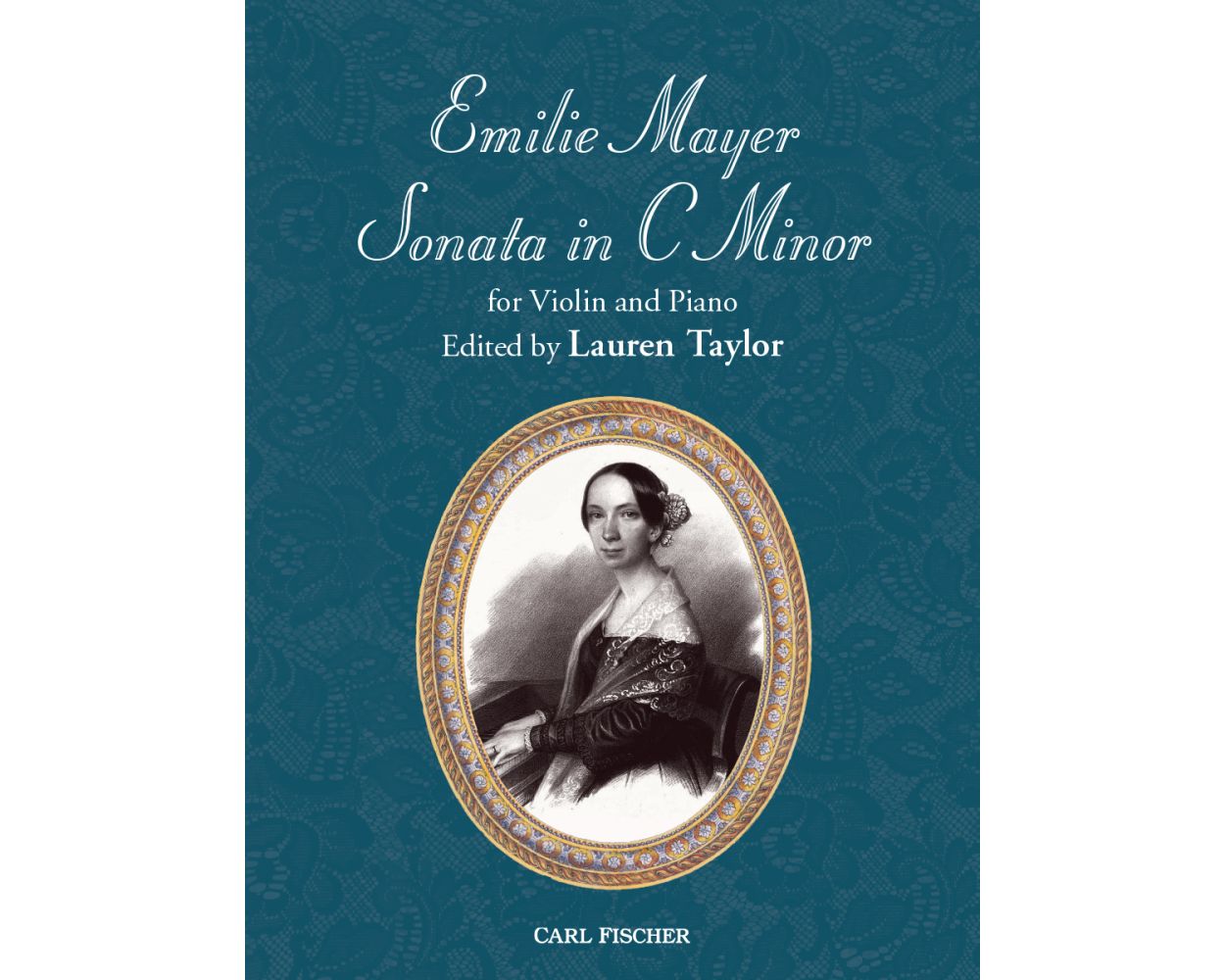
19th-century composer Emilie Mayer was prolific in her creation, writing eight symphonies, eight violin sonatas, twelve cello sonatas, seven string quartets, and six piano trios during her career. Although Mayer's music was well-known during her lifetime, it has largely only survived through original handwritten manuscripts. The material in this edition is taken directly from Mayer’s handwritten score, and marks the first version of her Sonata in C minor to be produced by a major publisher.
For decades the aim of young string players was to become soloists or orchestra players. The last several years have altered this trend considerably. Chamber music has now become a way of life for many instrumentalists. This does not imply there is a lack of interest in solo and orchestra work; as a matter of fact, our whole musical educational system is based on fine orchestras and band ensembles.
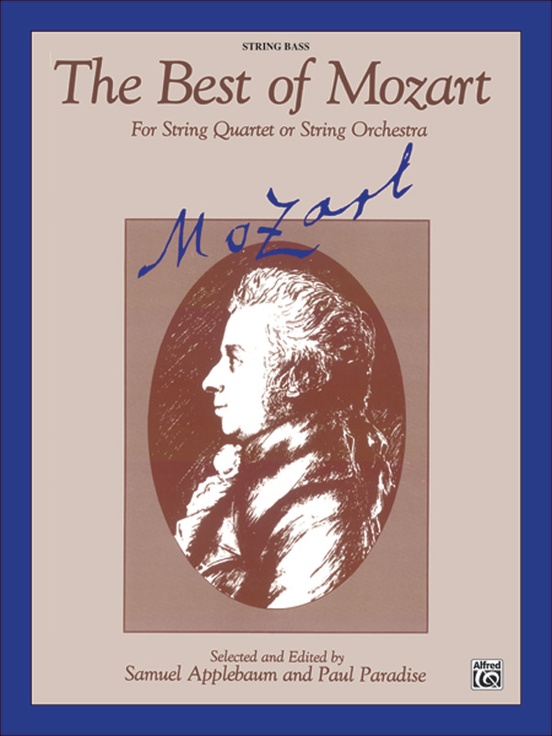
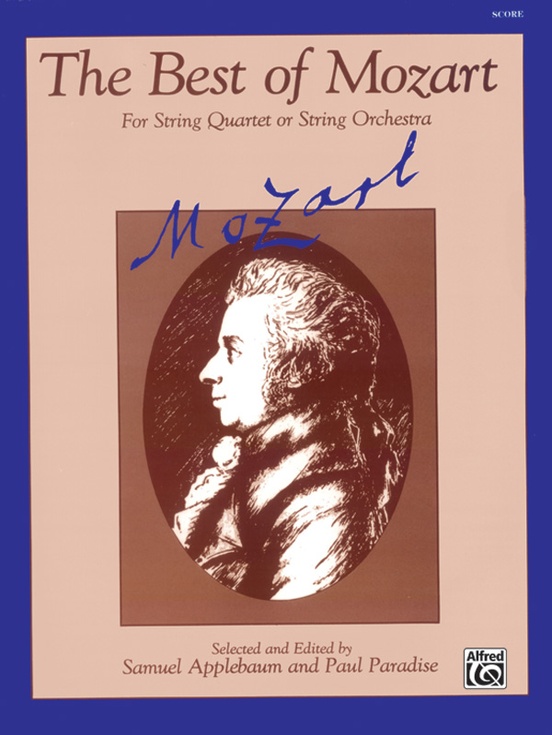
This album is designed to open the door to string quartet playing. The editors have chosen movement from the vast output of Mozart string quartets and assembled them according to the difficulty level. Care has been taken to edit each part with contemporary fingerings and bowings. Selections were chosen to provide each player with a meaningful part, and can serve two purposes:
1.) to learn some of the more important movements of Mozart's quartets
2.) to serve as an encore collection for recital purposes.
A string bass part has been added along with the score so that the album is suitable for string orchestra as well as string quartet.
Contents:
• Adagio (K. 170)
• Allegretto (K. 156)
• Allegro (K. 80)
• Allegro (K. 155)
• Allegro (K. 157)
• Divertimento (K. 138)
• Entr'acte (K. 138)
• Fugue (K. 168)
• Melody (K. 155)
• Menuetto (K. 421)
• Menuetto (K. 465)
• Menuetto and Trio (K. 298)
• Presto (K. 156)
• Presto (K. 157)
• Presto (K. 160)
• Rondo (K. 80)
• Rondo (K. 159)
Also Available:
Score
Violin 1 •
Violin 2 •
Viola •
Cello •
String Bass
For decades the aim of young string players was to become soloists or orchestra players. The last several years have altered this trend considerably. Chamber music has now become a way of life for many instrumentalists. This does not imply there is a lack of interest in solo and orchestra work; as a matter of fact, our whole musical educational system is based on fine orchestras and band ensembles.
This album is designed to open the door to string quartet playing. The editors have chosen movement from the vast output of Mozart string quartets and assembled them according to the difficulty level. Care has been taken to edit each part with contemporary fingerings and bowings. Selections were chosen to provide each player with a meaningful part, and can serve two purposes:
1.) to learn some of the more important movements of Mozart's quartets
2.) to serve as an encore collection for recital purposes.
A string bass part has been added along with the score so that the album is suitable for string orchestra as well as string quartet.
Contents:
• Adagio (K. 170)
• Allegretto (K. 156)
• Allegro (K. 80)
• Allegro (K. 155)
• Allegro (K. 157)
• Divertimento (K. 138)
• Entr'acte (K. 138)
• Fugue (K. 168)
• Melody (K. 155)
• Menuetto (K. 421)
• Menuetto (K. 465)
• Menuetto and Trio (K. 298)
• Presto (K. 156)
• Presto (K. 157)
• Presto (K. 160)
• Rondo (K. 80)
• Rondo (K. 159)
Also Available:
Score
Violin 1 •
Violin 2 •
Viola •
Cello •
String Bass
For decades the aim of young string players was to become soloists or orchestra players. The last several years have altered this trend considerably. Chamber music has now become a way of life for many instrumentalists. This does not imply there is a lack of interest in solo and orchestra work; as a matter of fact, our whole musical educational system is based on fine orchestras and band ensembles.
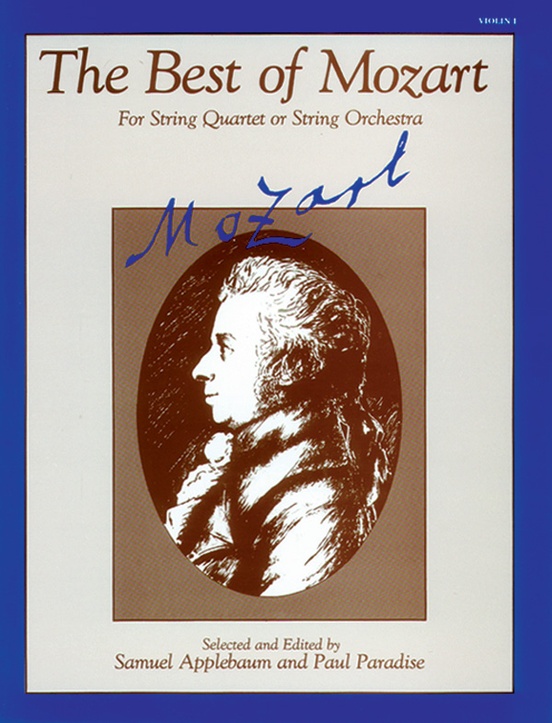
This album is designed to open the door to string quartet playing. The editors have chosen movement from the vast output of Mozart string quartets and assembled them according to the difficulty level. Care has been taken to edit each part with contemporary fingerings and bowings. Selections were chosen to provide each player with a meaningful part, and can serve two purposes:
1.) to learn some of the more important movements of Mozart's quartets
2.) to serve as an encore collection for recital purposes.
A string bass part has been added along with the score so that the album is suitable for string orchestra as well as string quartet.
Contents:
• Adagio (K. 170)
• Allegretto (K. 156)
• Allegro (K. 80)
• Allegro (K. 155)
• Allegro (K. 157)
• Divertimento (K. 138)
• Entr'acte (K. 138)
• Fugue (K. 168)
• Melody (K. 155)
• Menuetto (K. 421)
• Menuetto (K. 465)
• Menuetto and Trio (K. 298)
• Presto (K. 156)
• Presto (K. 157)
• Presto (K. 160)
• Rondo (K. 80)
• Rondo (K. 159)
Also Available:
Score
Violin 1 •
Violin 2 •
Viola •
Cello •
String Bass
For decades the aim of young string players was to become soloists or orchestra players. The last several years have altered this trend considerably. Chamber music has now become a way of life for many instrumentalists. This does not imply there is a lack of interest in solo and orchestra work; as a matter of fact, our whole musical educational system is based on fine orchestras and band ensembles.
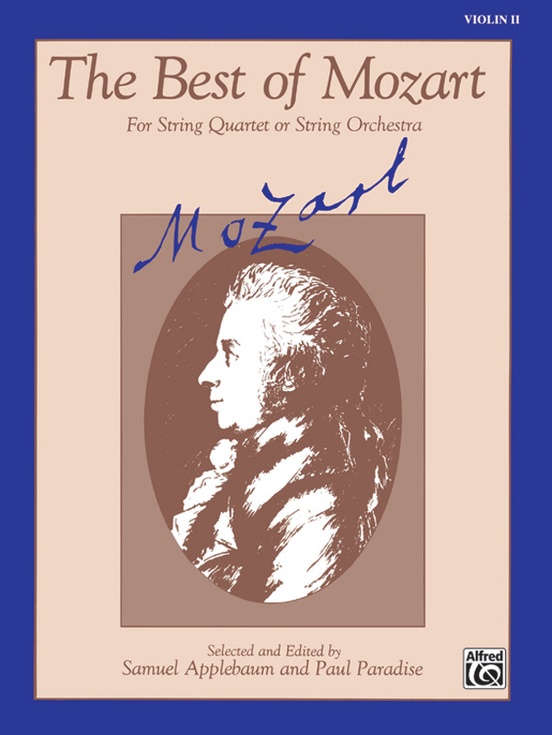
This album is designed to open the door to string quartet playing. The editors have chosen movement from the vast output of Mozart string quartets and assembled them according to the difficulty level. Care has been taken to edit each part with contemporary fingerings and bowings. Selections were chosen to provide each player with a meaningful part, and can serve two purposes:
1.) to learn some of the more important movements of Mozart's quartets
2.) to serve as an encore collection for recital purposes.
A string bass part has been added along with the score so that the album is suitable for string orchestra as well as string quartet.
Contents:
• Adagio (K. 170)
• Allegretto (K. 156)
• Allegro (K. 80)
• Allegro (K. 155)
• Allegro (K. 157)
• Divertimento (K. 138)
• Entr'acte (K. 138)
• Fugue (K. 168)
• Melody (K. 155)
• Menuetto (K. 421)
• Menuetto (K. 465)
• Menuetto and Trio (K. 298)
• Presto (K. 156)
• Presto (K. 157)
• Presto (K. 160)
• Rondo (K. 80)
• Rondo (K. 159)
Also Available:
Score
Violin 1 •
Violin 2 •
Viola •
Cello •
String Bass
For decades the aim of young string players was to become soloists or orchestra players. The last several years have altered this trend considerably. Chamber music has now become a way of life for many instrumentalists. This does not imply there is a lack of interest in solo and orchestra work; as a matter of fact, our whole musical educational system is based on fine orchestras and band ensembles.
This album is designed to open the door to string quartet playing. The editors have chosen movement from the vast output of Mozart string quartets and assembled them according to the difficulty level. Care has been taken to edit each part with contemporary fingerings and bowings. Selections were chosen to provide each player with a meaningful part, and can serve two purposes:
1.) to learn some of the more important movements of Mozart's quartets
2.) to serve as an encore collection for recital purposes.
A string bass part has been added along with the score so that the album is suitable for string orchestra as well as string quartet.
Contents:
• Adagio (K. 170)
• Allegretto (K. 156)
• Allegro (K. 80)
• Allegro (K. 155)
• Allegro (K. 157)
• Divertimento (K. 138)
• Entr'acte (K. 138)
• Fugue (K. 168)
• Melody (K. 155)
• Menuetto (K. 421)
• Menuetto (K. 465)
• Menuetto and Trio (K. 298)
• Presto (K. 156)
• Presto (K. 157)
• Presto (K. 160)
• Rondo (K. 80)
• Rondo (K. 159)
Also Available:
Score
Violin 1 •
Violin 2 •
Viola •
Cello •
String Bass
Piano Accompaniment
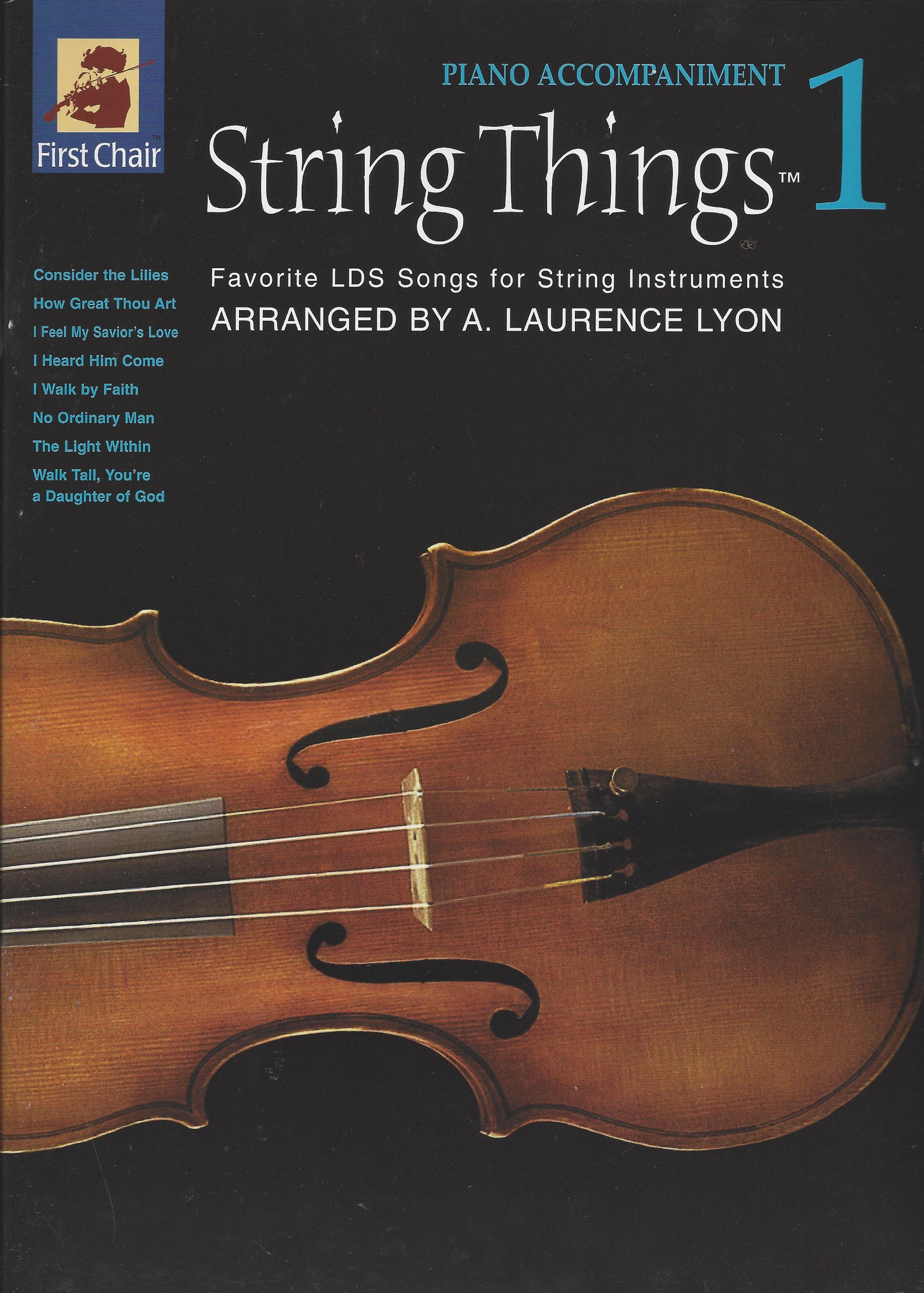
Instrumental arrangement collection for violin. May be used to feature either a soloist or ensemble, to create duets, trios, quartets, or full string orchestra.
Arrangements in this collection:
Consider the Lillies
How Great Shall Be Your Joy
How Great Thou Art
I Feel My Savior's Love
I Heard Him Come
I Walk By Faith
The Light Within
No Ordinary Man
Walk Tall, You're a Daughter of God
Violin – 01381
Viola – 01382
Cello – 01383
Double Bass – 01384
Piano Accompaniment – 01380
Reference: Psalm 8:3-9, Mosiah 4:5-13
For decades the aim of young string players was to become soloists or orchestra players. The last several years have altered this trend considerably. Chamber music has now become a way of life for many instrumentalists. This does not imply there is a lack of interest in solo and orchestra work; as a matter of fact, our whole musical educational system is based on fine orchestras and band ensembles.
This album is designed to open the door to string quartet playing. The editors have chosen movement from the vast output of Mozart string quartets and assembled them according to the difficulty level. Care has been taken to edit each part with contemporary fingerings and bowings. Selections were chosen to provide each player with a meaningful part, and can serve two purposes:
1.) to learn some of the more important movements of Mozart's quartets
2.) to serve as an encore collection for recital purposes.
A string bass part has been added along with the score so that the album is suitable for string orchestra as well as string quartet.
Contents:
• Adagio (K. 170)
• Allegretto (K. 156)
• Allegro (K. 80)
• Allegro (K. 155)
• Allegro (K. 157)
• Divertimento (K. 138)
• Entr'acte (K. 138)
• Fugue (K. 168)
• Melody (K. 155)
• Menuetto (K. 421)
• Menuetto (K. 465)
• Menuetto and Trio (K. 298)
• Presto (K. 156)
• Presto (K. 157)
• Presto (K. 160)
• Rondo (K. 80)
• Rondo (K. 159)
Also Available:
Score
Violin 1 •
Violin 2 •
Viola •
Cello •
String Bass
Gershwin's Three Preludes are arranged for piano duet (1 piano, 4 hands) by the master arranger Eugénie Rocherolle, making them fully accessible for intermediate-level pianists. The distinct combination of classical and jazz elements makes the preludes an essential part of any pianist's repertoire, and now students of all ages can enjoy the full flavor of the pieces without the virtuoso technique usually required. This book-only collection is destined to become a staple of the piano duet repertoire for years to come!
Contents:
• Allegro ben ritmato e deciso
• Andante con moto e poco rubato
• Agitato