Habits of a Successful Beginner Band Musician is a field-tested, vital, and—most important—musical collection of 225 sequenced exercises for the beginning band student. The book’s cutting-edge online component, Habits Universal, features a backend gradebook that allows students to submit video recordings of their performances as a primary source of assessment. This gradebook is compatible with PowerSchool, Canvas, Google Classroom, Brightspace, Edmodo, Schoology, and many other platforms! In addition, Habits Universal features supplemental rhythm vocabulary sheets, accompaniment tracks, video start-up clinics, as well as a professional video coach for each exercise in the book.
What makes Habits of a Successful Beginner Band Musician unique? Features include:
Teacher tips for each exercise in the book.
Diatonic solfege that begins on the first day of instruction.
Initial exercises on the mouthpiece, mouthpiece and barrel, reed, bocal and reed, or headjoint prior to playing the first notes in the book.
Sequential rhythm charts embedded in the book. These same rhythms are then presented with pitches for a seamless transfer to the music students are performing.
Technique and skill-building exercises embedded within the method, which helps to prepare students for future Habits exercises.
The introduction of the key of Concert C, which results in students playing the pitches B, E, and A more often (as opposed to the typical emphasis on B-flat, E-flat, and A-flat).
The introduction of five keys: Concert B-flat, E-flat, A-flat, C, and F. The Concert G scale is also provided in the back of the book.
Left (L) and right (R) indicators for woodwinds along with appropriate chromatic alternate fingering indicators.
Shaded boxes around first-time challenges in the student books.
A thorough explanation of (T:1) for trombones and rules for when to use it.
Rhythm vocabulary that progresses through quarters, eighths, dotted rhythms, sixteenths, and an eighth and two sixteenths.
The sequential introduction of the one-handed breakdown of a percussion rudiment before introducing the rudiment itself.
The use of the “enharmonic ladder” and the “call-and-response game” to learn enharmonic notes.
A thorough explanation of and markings for the “F dilemma” on oboe.
An explanation of appropriate flicking on bassoon.
Two pages of slow “clarinets only” work that focuses on going over the break and throat tones.
Habits of a Successful Beginner Band Musician is a field-tested, vital, and—most important—musical collection of 225 sequenced exercises for the beginning band student. The book’s cutting-edge online component, Habits Universal, features a backend gradebook that allows students to submit video recordings of their performances as a primary source of assessment. This gradebook is compatible with PowerSchool, Canvas, Google Classroom, Brightspace, Edmodo, Schoology, and many other platforms! In addition, Habits Universal features supplemental rhythm vocabulary sheets, accompaniment tracks, video start-up clinics, as well as a professional video coach for each exercise in the book.
What makes Habits of a Successful Beginner Band Musician unique? Features include:
Teacher tips for each exercise in the book.
Diatonic solfege that begins on the first day of instruction.
Initial exercises on the mouthpiece, mouthpiece and barrel, reed, bocal and reed, or headjoint prior to playing the first notes in the book.
Sequential rhythm charts embedded in the book. These same rhythms are then presented with pitches for a seamless transfer to the music students are performing.
Technique and skill-building exercises embedded within the method, which helps to prepare students for future Habits exercises.
The introduction of the key of Concert C, which results in students playing the pitches B, E, and A more often (as opposed to the typical emphasis on B-flat, E-flat, and A-flat).
The introduction of five keys: Concert B-flat, E-flat, A-flat, C, and F. The Concert G scale is also provided in the back of the book.
Left (L) and right (R) indicators for woodwinds along with appropriate chromatic alternate fingering indicators.
Shaded boxes around first-time challenges in the student books.
A thorough explanation of (T:1) for trombones and rules for when to use it.
Rhythm vocabulary that progresses through quarters, eighths, dotted rhythms, sixteenths, and an eighth and two sixteenths.
The sequential introduction of the one-handed breakdown of a percussion rudiment before introducing the rudiment itself.
The use of the “enharmonic ladder” and the “call-and-response game” to learn enharmonic notes.
A thorough explanation of and markings for the “F dilemma” on oboe.
An explanation of appropriate flicking on bassoon.
Two pages of slow “clarinets only” work that focuses on going over the break and throat tones.
Habits of a Successful Beginner Band Musician is a field-tested, vital, and—most important—musical collection of 225 sequenced exercises for the beginning band student. The book’s cutting-edge online component, Habits Universal, features a backend gradebook that allows students to submit video recordings of their performances as a primary source of assessment. This gradebook is compatible with PowerSchool, Canvas, Google Classroom, Brightspace, Edmodo, Schoology, and many other platforms! In addition, Habits Universal features supplemental rhythm vocabulary sheets, accompaniment tracks, video start-up clinics, as well as a professional video coach for each exercise in the book.
What makes Habits of a Successful Beginner Band Musician unique? Features include:
Teacher tips for each exercise in the book.
Diatonic solfege that begins on the first day of instruction.
Initial exercises on the mouthpiece, mouthpiece and barrel, reed, bocal and reed, or headjoint prior to playing the first notes in the book.
Sequential rhythm charts embedded in the book. These same rhythms are then presented with pitches for a seamless transfer to the music students are performing.
Technique and skill-building exercises embedded within the method, which helps to prepare students for future Habits exercises.
The introduction of the key of Concert C, which results in students playing the pitches B, E, and A more often (as opposed to the typical emphasis on B-flat, E-flat, and A-flat).
The introduction of five keys: Concert B-flat, E-flat, A-flat, C, and F. The Concert G scale is also provided in the back of the book.
Left (L) and right (R) indicators for woodwinds along with appropriate chromatic alternate fingering indicators.
Shaded boxes around first-time challenges in the student books.
A thorough explanation of (T:1) for trombones and rules for when to use it.
Rhythm vocabulary that progresses through quarters, eighths, dotted rhythms, sixteenths, and an eighth and two sixteenths.
The sequential introduction of the one-handed breakdown of a percussion rudiment before introducing the rudiment itself.
The use of the “enharmonic ladder” and the “call-and-response game” to learn enharmonic notes.
A thorough explanation of and markings for the “F dilemma” on oboe.
An explanation of appropriate flicking on bassoon.
Two pages of slow “clarinets only” work that focuses on going over the break and throat tones.
Habits of a Successful Beginner Band Musician is a field-tested, vital, and—most important—musical collection of 225 sequenced exercises for the beginning band student. The book’s cutting-edge online component, Habits Universal, features a backend gradebook that allows students to submit video recordings of their performances as a primary source of assessment. This gradebook is compatible with PowerSchool, Canvas, Google Classroom, Brightspace, Edmodo, Schoology, and many other platforms! In addition, Habits Universal features supplemental rhythm vocabulary sheets, accompaniment tracks, video start-up clinics, as well as a professional video coach for each exercise in the book.
What makes Habits of a Successful Beginner Band Musician unique? Features include:
Teacher tips for each exercise in the book.
Diatonic solfege that begins on the first day of instruction.
Initial exercises on the mouthpiece, mouthpiece and barrel, reed, bocal and reed, or headjoint prior to playing the first notes in the book.
Sequential rhythm charts embedded in the book. These same rhythms are then presented with pitches for a seamless transfer to the music students are performing.
Technique and skill-building exercises embedded within the method, which helps to prepare students for future Habits exercises.
The introduction of the key of Concert C, which results in students playing the pitches B, E, and A more often (as opposed to the typical emphasis on B-flat, E-flat, and A-flat).
The introduction of five keys: Concert B-flat, E-flat, A-flat, C, and F. The Concert G scale is also provided in the back of the book.
Left (L) and right (R) indicators for woodwinds along with appropriate chromatic alternate fingering indicators.
Shaded boxes around first-time challenges in the student books.
A thorough explanation of (T:1) for trombones and rules for when to use it.
Rhythm vocabulary that progresses through quarters, eighths, dotted rhythms, sixteenths, and an eighth and two sixteenths.
The sequential introduction of the one-handed breakdown of a percussion rudiment before introducing the rudiment itself.
The use of the “enharmonic ladder” and the “call-and-response game” to learn enharmonic notes.
A thorough explanation of and markings for the “F dilemma” on oboe.
An explanation of appropriate flicking on bassoon.
Two pages of slow “clarinets only” work that focuses on going over the break and throat tones.
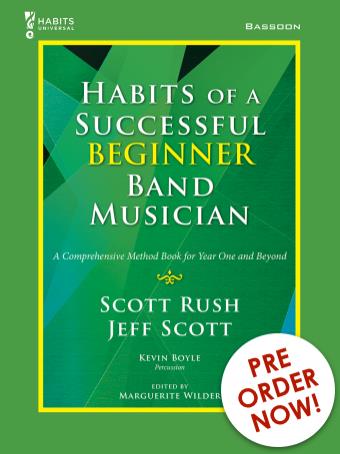
Habits of a Successful Beginner Band Musician is a field-tested, vital, and—most important—musical collection of 225 sequenced exercises for the beginning band student. The book’s cutting-edge online component, Habits Universal, features a backend gradebook that allows students to submit video recordings of their performances as a primary source of assessment. This gradebook is compatible with PowerSchool, Canvas, Google Classroom, Brightspace, Edmodo, Schoology, and many other platforms! In addition, Habits Universal features supplemental rhythm vocabulary sheets, accompaniment tracks, video start-up clinics, as well as a professional video coach for each exercise in the book.
What makes Habits of a Successful Beginner Band Musician unique? Features include:
Teacher tips for each exercise in the book.
Diatonic solfege that begins on the first day of instruction.
Initial exercises on the mouthpiece, mouthpiece and barrel, reed, bocal and reed, or headjoint prior to playing the first notes in the book.
Sequential rhythm charts embedded in the book. These same rhythms are then presented with pitches for a seamless transfer to the music students are performing.
Technique and skill-building exercises embedded within the method, which helps to prepare students for future Habits exercises.
The introduction of the key of Concert C, which results in students playing the pitches B, E, and A more often (as opposed to the typical emphasis on B-flat, E-flat, and A-flat).
The introduction of five keys: Concert B-flat, E-flat, A-flat, C, and F. The Concert G scale is also provided in the back of the book.
Left (L) and right (R) indicators for woodwinds along with appropriate chromatic alternate fingering indicators.
Shaded boxes around first-time challenges in the student books.
A thorough explanation of (T:1) for trombones and rules for when to use it.
Rhythm vocabulary that progresses through quarters, eighths, dotted rhythms, sixteenths, and an eighth and two sixteenths.
The sequential introduction of the one-handed breakdown of a percussion rudiment before introducing the rudiment itself.
The use of the “enharmonic ladder” and the “call-and-response game” to learn enharmonic notes.
A thorough explanation of and markings for the “F dilemma” on oboe.
An explanation of appropriate flicking on bassoon.
Two pages of slow “clarinets only” work that focuses on going over the break and throat tones.
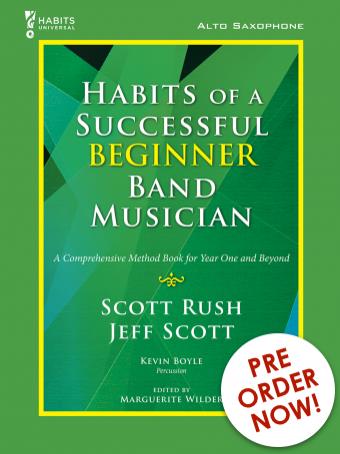
Habits of a Successful Beginner Band Musician is a field-tested, vital, and—most important—musical collection of 225 sequenced exercises for the beginning band student. The book’s cutting-edge online component, Habits Universal, features a backend gradebook that allows students to submit video recordings of their performances as a primary source of assessment. This gradebook is compatible with PowerSchool, Canvas, Google Classroom, Brightspace, Edmodo, Schoology, and many other platforms! In addition, Habits Universal features supplemental rhythm vocabulary sheets, accompaniment tracks, video start-up clinics, as well as a professional video coach for each exercise in the book.
What makes Habits of a Successful Beginner Band Musician unique? Features include:
Teacher tips for each exercise in the book.
Diatonic solfege that begins on the first day of instruction.
Initial exercises on the mouthpiece, mouthpiece and barrel, reed, bocal and reed, or headjoint prior to playing the first notes in the book.
Sequential rhythm charts embedded in the book. These same rhythms are then presented with pitches for a seamless transfer to the music students are performing.
Technique and skill-building exercises embedded within the method, which helps to prepare students for future Habits exercises.
The introduction of the key of Concert C, which results in students playing the pitches B, E, and A more often (as opposed to the typical emphasis on B-flat, E-flat, and A-flat).
The introduction of five keys: Concert B-flat, E-flat, A-flat, C, and F. The Concert G scale is also provided in the back of the book.
Left (L) and right (R) indicators for woodwinds along with appropriate chromatic alternate fingering indicators.
Shaded boxes around first-time challenges in the student books.
A thorough explanation of (T:1) for trombones and rules for when to use it.
Rhythm vocabulary that progresses through quarters, eighths, dotted rhythms, sixteenths, and an eighth and two sixteenths.
The sequential introduction of the one-handed breakdown of a percussion rudiment before introducing the rudiment itself.
The use of the “enharmonic ladder” and the “call-and-response game” to learn enharmonic notes.
A thorough explanation of and markings for the “F dilemma” on oboe.
An explanation of appropriate flicking on bassoon.
Two pages of slow “clarinets only” work that focuses on going over the break and throat tones.
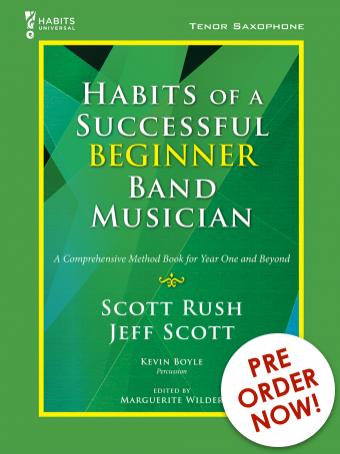
Habits of a Successful Beginner Band Musician is a field-tested, vital, and—most important—musical collection of 225 sequenced exercises for the beginning band student. The book’s cutting-edge online component, Habits Universal, features a backend gradebook that allows students to submit video recordings of their performances as a primary source of assessment. This gradebook is compatible with PowerSchool, Canvas, Google Classroom, Brightspace, Edmodo, Schoology, and many other platforms! In addition, Habits Universal features supplemental rhythm vocabulary sheets, accompaniment tracks, video start-up clinics, as well as a professional video coach for each exercise in the book.
What makes Habits of a Successful Beginner Band Musician unique? Features include:
Teacher tips for each exercise in the book.
Diatonic solfege that begins on the first day of instruction.
Initial exercises on the mouthpiece, mouthpiece and barrel, reed, bocal and reed, or headjoint prior to playing the first notes in the book.
Sequential rhythm charts embedded in the book. These same rhythms are then presented with pitches for a seamless transfer to the music students are performing.
Technique and skill-building exercises embedded within the method, which helps to prepare students for future Habits exercises.
The introduction of the key of Concert C, which results in students playing the pitches B, E, and A more often (as opposed to the typical emphasis on B-flat, E-flat, and A-flat).
The introduction of five keys: Concert B-flat, E-flat, A-flat, C, and F. The Concert G scale is also provided in the back of the book.
Left (L) and right (R) indicators for woodwinds along with appropriate chromatic alternate fingering indicators.
Shaded boxes around first-time challenges in the student books.
A thorough explanation of (T:1) for trombones and rules for when to use it.
Rhythm vocabulary that progresses through quarters, eighths, dotted rhythms, sixteenths, and an eighth and two sixteenths.
The sequential introduction of the one-handed breakdown of a percussion rudiment before introducing the rudiment itself.
The use of the “enharmonic ladder” and the “call-and-response game” to learn enharmonic notes.
A thorough explanation of and markings for the “F dilemma” on oboe.
An explanation of appropriate flicking on bassoon.
Two pages of slow “clarinets only” work that focuses on going over the break and throat tones.
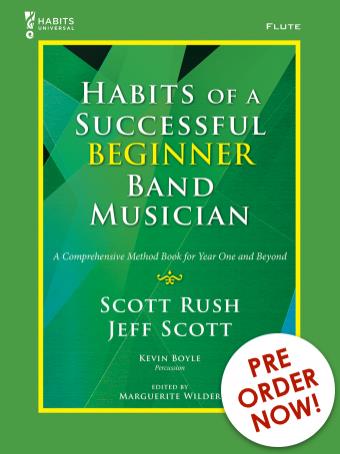
Habits of a Successful Beginner Band Musician is a field-tested, vital, and—most important—musical collection of 225 sequenced exercises for the beginning band student. The book’s cutting-edge online component, Habits Universal, features a backend gradebook that allows students to submit video recordings of their performances as a primary source of assessment. This gradebook is compatible with PowerSchool, Canvas, Google Classroom, Brightspace, Edmodo, Schoology, and many other platforms! In addition, Habits Universal features supplemental rhythm vocabulary sheets, accompaniment tracks, video start-up clinics, as well as a professional video coach for each exercise in the book.
What makes Habits of a Successful Beginner Band Musician unique? Features include:
Teacher tips for each exercise in the book.
Diatonic solfege that begins on the first day of instruction.
Initial exercises on the mouthpiece, mouthpiece and barrel, reed, bocal and reed, or headjoint prior to playing the first notes in the book.
Sequential rhythm charts embedded in the book. These same rhythms are then presented with pitches for a seamless transfer to the music students are performing.
Technique and skill-building exercises embedded within the method, which helps to prepare students for future Habits exercises.
The introduction of the key of Concert C, which results in students playing the pitches B, E, and A more often (as opposed to the typical emphasis on B-flat, E-flat, and A-flat).
The introduction of five keys: Concert B-flat, E-flat, A-flat, C, and F. The Concert G scale is also provided in the back of the book.
Left (L) and right (R) indicators for woodwinds along with appropriate chromatic alternate fingering indicators.
Shaded boxes around first-time challenges in the student books.
A thorough explanation of (T:1) for trombones and rules for when to use it.
Rhythm vocabulary that progresses through quarters, eighths, dotted rhythms, sixteenths, and an eighth and two sixteenths.
The sequential introduction of the one-handed breakdown of a percussion rudiment before introducing the rudiment itself.
The use of the “enharmonic ladder” and the “call-and-response game” to learn enharmonic notes.
A thorough explanation of and markings for the “F dilemma” on oboe.
An explanation of appropriate flicking on bassoon.
Two pages of slow “clarinets only” work that focuses on going over the break and throat tones.

41 Recital Pieces with Piano Accompaniment
Renowned saxophone pedagogue Lee Patrick has compiled this comprehensive collection of solos for saxophone for the All-Time Favorites series. Modeled on the previous books for flute, clarinet, trumpet and trombone, this 144 page book covers repertoire from grades two through five. Many of these titles are on state Required Music and Festival Lists and all the solos are wonderful for teaching musicianship to players of all ages. Music by Arne, Bach, Bizet, Brahms, Debussy, Franck, Gossec, Haydn, Mozart, Rossini, Telemann, et. al. including such gems as: the Sicilienne from Pelléas et Mélisande (Fauré) and the celebrated Tango by Isaac Albéniz. This is an essential repertoire collection for all saxophone teachers and performers.
Contents:
• Tango
• Allegretto
• Arioso
• Bist du bei mir
• Entr'acte
• Minuet
• Waltz
• Kol Nidrei
• Sicilienne
• Largo
• Sarabande
• Gigue
• Reverie
• Panis Angelicus
• Serenade
• Aria
• Minuet and Dance of the Blessed Spirits
• Gavotte
• Tambourin
• Meditation
• Solvejg's Song
• Giga
• The Harmonious Blacksmith
• Liebestraum
• Cantabile
• Sonata
• Adagio
• Aria
• Tarantella
• On Wings of Song
• Pavane
• The Swan
• Gymnopedie No. 2
• Ave Maria
• Serenade
• Traumerei
• Minuet
• Largo and Allegro
• Sonata
• Andante
• June
Composers:
• Johannes Brahms • Max Bruch • Felix Mendelssohn • Wolfgang Amadeus Mozart • Franz Joseph Haydn • George Frideric Handel • Gioacchino Rossini • Antonio Vivaldi • Giuseppe Giordani • Christopf von Gluck • César Franck • Edvard Grieg • Johann Sebastian Bach • Charles Gounod • François-Joseph Gossec • Isaac Albéniz • Pyotr Ilyich Tchaikovsky • Georg Philipp Telemann • Georges Bizet • Claude Debussy
Arcangelo Corelli • Thomas Arne • Gabriel Fauré • Franz Liszt • Benedetto Marcello • Pietro Locatelli • Robert Schumann • Camille Saint-Saëns • Erik Satie • Franz Schubert • Frédéric Chopin
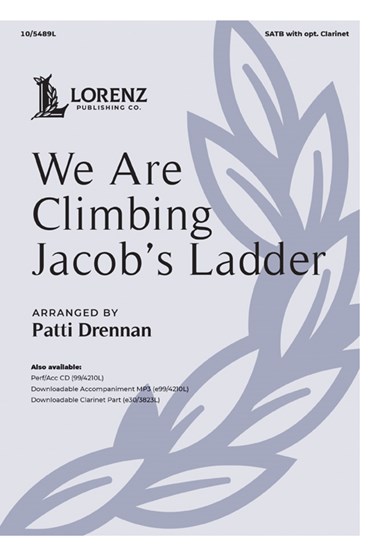
SATB and Piano with optional Clarinet
Patti Drennan arranged this spiritual with a fun gospel groove accompanied by an optional clarinet. Repeating verses, embellished by expanding vocal harmonies and textures, make it easy to learn.