
Alfred Music presents a versatile collection of classic patriotic tunes for flute, clarinet, alto sax, tenor sax, trumpet, horn in F, trombone, violin, viola, and cello. Each book features carefully edited arrangements that are appropriate to each instrument and well-suited for level 2–3 students. Companion media is available online and includes fully orchestrated demo tracks of each song, featuring a live instrumental solo performance, followed by a play-along track. Also included are PDFs of piano accompaniments and Alfred's Tone and Tempo Changer software.
Titles: Amazing Grace * America (My Country 'Tis of Thee) * America the Beautiful * Armed Forces Medley (The Army Goes Rolling Along/Marines' Hymn/Anchors Aweigh) * Battle Hymn of the Republic * Columbia, the Gem of the Ocean * Eternal Father, Strong to Save * The Liberty Bell * National Emblem * Semper Fidelis * The Stars and Stripes Forever * The Star-Spangled Banner * The Washington Post * The Yankee Doodle Boy * You're a Grand Old Flag

Alfred Music presents a versatile collection of classic patriotic tunes for flute, clarinet, alto sax, tenor sax, trumpet, horn in F, trombone, violin, viola, and cello. Each book features carefully edited arrangements that are appropriate to each instrument and well-suited for level 2–3 students. Companion media is available online and includes fully orchestrated demo tracks of each song, featuring a live instrumental solo performance, followed by a play-along track. Also included are PDFs of piano accompaniments and Alfred's Tone and Tempo Changer software.
Titles: Amazing Grace * America (My Country 'Tis of Thee) * America the Beautiful * Armed Forces Medley (The Army Goes Rolling Along/Marines' Hymn/Anchors Aweigh) * Battle Hymn of the Republic * Columbia, the Gem of the Ocean * Eternal Father, Strong to Save * The Liberty Bell * National Emblem * Semper Fidelis * The Stars and Stripes Forever * The Star-Spangled Banner * The Washington Post * The Yankee Doodle Boy * You're a Grand Old Flag

Alfred Music presents a versatile collection of classic patriotic tunes for flute, clarinet, alto sax, tenor sax, trumpet, horn in F, trombone, violin, viola, and cello. Each book features carefully edited arrangements that are appropriate to each instrument and well-suited for level 2–3 students. Companion media is available online and includes fully orchestrated demo tracks of each song, featuring a live instrumental solo performance, followed by a play-along track. Also included are PDFs of piano accompaniments and Alfred's Tone and Tempo Changer software.
Titles: Amazing Grace * America (My Country 'Tis of Thee) * America the Beautiful * Armed Forces Medley (The Army Goes Rolling Along/Marines' Hymn/Anchors Aweigh) * Battle Hymn of the Republic * Columbia, the Gem of the Ocean * Eternal Father, Strong to Save * The Liberty Bell * National Emblem * Semper Fidelis * The Stars and Stripes Forever * The Star-Spangled Banner * The Washington Post * The Yankee Doodle Boy * You're a Grand Old Flag

Alfred Music presents a versatile collection of classic patriotic tunes for flute, clarinet, alto sax, tenor sax, trumpet, horn in F, trombone, violin, viola, and cello. Each book features carefully edited arrangements that are appropriate to each instrument and well-suited for level 2–3 students. Companion media is available online and includes fully orchestrated demo tracks of each song, featuring a live instrumental solo performance, followed by a play-along track. Also included are PDFs of piano accompaniments and Alfred's Tone and Tempo Changer software.
Titles: Amazing Grace * America (My Country 'Tis of Thee) * America the Beautiful * Armed Forces Medley (The Army Goes Rolling Along/Marines' Hymn/Anchors Aweigh) * Battle Hymn of the Republic * Columbia, the Gem of the Ocean * Eternal Father, Strong to Save * The Liberty Bell * National Emblem * Semper Fidelis * The Stars and Stripes Forever * The Star-Spangled Banner * The Washington Post * The Yankee Doodle Boy * You're a Grand Old Flag

Alfred Music presents a versatile collection of classic patriotic tunes for flute, clarinet, alto sax, tenor sax, trumpet, horn in F, trombone, violin, viola, and cello. Each book features carefully edited arrangements that are appropriate to each instrument and well-suited for level 2–3 students. Companion media is available online and includes fully orchestrated demo tracks of each song, featuring a live instrumental solo performance, followed by a play-along track. Also included are PDFs of piano accompaniments and Alfred's Tone and Tempo Changer software.
Titles: Amazing Grace * America (My Country 'Tis of Thee) * America the Beautiful * Armed Forces Medley (The Army Goes Rolling Along/Marines' Hymn/Anchors Aweigh) * Battle Hymn of the Republic * Columbia, the Gem of the Ocean * Eternal Father, Strong to Save * The Liberty Bell * National Emblem * Semper Fidelis * The Stars and Stripes Forever * The Star-Spangled Banner * The Washington Post * The Yankee Doodle Boy * You're a Grand Old Flag

Alfred Music presents a versatile collection of classic patriotic tunes for flute, clarinet, alto sax, tenor sax, trumpet, horn in F, trombone, violin, viola, and cello. Each book features carefully edited arrangements that are appropriate to each instrument and well-suited for level 2–3 students. Companion media is available online and includes fully orchestrated demo tracks of each song, featuring a live instrumental solo performance, followed by a play-along track. Also included are PDFs of piano accompaniments and Alfred's Tone and Tempo Changer software.
Titles: Amazing Grace * America (My Country 'Tis of Thee) * America the Beautiful * Armed Forces Medley (The Army Goes Rolling Along/Marines' Hymn/Anchors Aweigh) * Battle Hymn of the Republic * Columbia, the Gem of the Ocean * Eternal Father, Strong to Save * The Liberty Bell * National Emblem * Semper Fidelis * The Stars and Stripes Forever * The Star-Spangled Banner * The Washington Post * The Yankee Doodle Boy * You're a Grand Old Flag
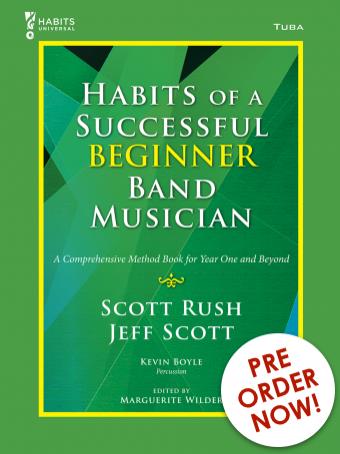
Habits of a Successful Beginner Band Musician is a field-tested, vital, and—most important—musical collection of 225 sequenced exercises for the beginning band student. The book’s cutting-edge online component, Habits Universal, features a backend gradebook that allows students to submit video recordings of their performances as a primary source of assessment. This gradebook is compatible with PowerSchool, Canvas, Google Classroom, Brightspace, Edmodo, Schoology, and many other platforms! In addition, Habits Universal features supplemental rhythm vocabulary sheets, accompaniment tracks, video start-up clinics, as well as a professional video coach for each exercise in the book.
What makes Habits of a Successful Beginner Band Musician unique? Features include:
Teacher tips for each exercise in the book.
Diatonic solfege that begins on the first day of instruction.
Initial exercises on the mouthpiece, mouthpiece and barrel, reed, bocal and reed, or headjoint prior to playing the first notes in the book.
Sequential rhythm charts embedded in the book. These same rhythms are then presented with pitches for a seamless transfer to the music students are performing.
Technique and skill-building exercises embedded within the method, which helps to prepare students for future Habits exercises.
The introduction of the key of Concert C, which results in students playing the pitches B, E, and A more often (as opposed to the typical emphasis on B-flat, E-flat, and A-flat).
The introduction of five keys: Concert B-flat, E-flat, A-flat, C, and F. The Concert G scale is also provided in the back of the book.
Left (L) and right (R) indicators for woodwinds along with appropriate chromatic alternate fingering indicators.
Shaded boxes around first-time challenges in the student books.
A thorough explanation of (T:1) for trombones and rules for when to use it.
Rhythm vocabulary that progresses through quarters, eighths, dotted rhythms, sixteenths, and an eighth and two sixteenths.
The sequential introduction of the one-handed breakdown of a percussion rudiment before introducing the rudiment itself.
The use of the “enharmonic ladder” and the “call-and-response game” to learn enharmonic notes.
A thorough explanation of and markings for the “F dilemma” on oboe.
An explanation of appropriate flicking on bassoon.
Two pages of slow “clarinets only” work that focuses on going over the break and throat tones.
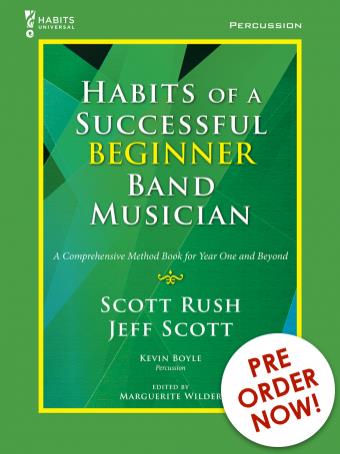
Habits of a Successful Beginner Band Musician is a field-tested, vital, and—most important—musical collection of 225 sequenced exercises for the beginning band student. The book’s cutting-edge online component, Habits Universal, features a backend gradebook that allows students to submit video recordings of their performances as a primary source of assessment. This gradebook is compatible with PowerSchool, Canvas, Google Classroom, Brightspace, Edmodo, Schoology, and many other platforms! In addition, Habits Universal features supplemental rhythm vocabulary sheets, accompaniment tracks, video start-up clinics, as well as a professional video coach for each exercise in the book.
What makes Habits of a Successful Beginner Band Musician unique? Features include:
Teacher tips for each exercise in the book.
Diatonic solfege that begins on the first day of instruction.
Initial exercises on the mouthpiece, mouthpiece and barrel, reed, bocal and reed, or headjoint prior to playing the first notes in the book.
Sequential rhythm charts embedded in the book. These same rhythms are then presented with pitches for a seamless transfer to the music students are performing.
Technique and skill-building exercises embedded within the method, which helps to prepare students for future Habits exercises.
The introduction of the key of Concert C, which results in students playing the pitches B, E, and A more often (as opposed to the typical emphasis on B-flat, E-flat, and A-flat).
The introduction of five keys: Concert B-flat, E-flat, A-flat, C, and F. The Concert G scale is also provided in the back of the book.
Left (L) and right (R) indicators for woodwinds along with appropriate chromatic alternate fingering indicators.
Shaded boxes around first-time challenges in the student books.
A thorough explanation of (T:1) for trombones and rules for when to use it.
Rhythm vocabulary that progresses through quarters, eighths, dotted rhythms, sixteenths, and an eighth and two sixteenths.
The sequential introduction of the one-handed breakdown of a percussion rudiment before introducing the rudiment itself.
The use of the “enharmonic ladder” and the “call-and-response game” to learn enharmonic notes.
A thorough explanation of and markings for the “F dilemma” on oboe.
An explanation of appropriate flicking on bassoon.
Two pages of slow “clarinets only” work that focuses on going over the break and throat tones.
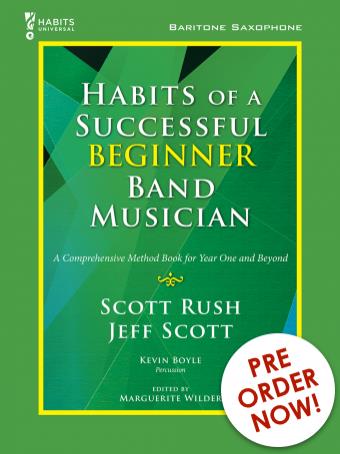
Habits of a Successful Beginner Band Musician is a field-tested, vital, and—most important—musical collection of 225 sequenced exercises for the beginning band student. The book’s cutting-edge online component, Habits Universal, features a backend gradebook that allows students to submit video recordings of their performances as a primary source of assessment. This gradebook is compatible with PowerSchool, Canvas, Google Classroom, Brightspace, Edmodo, Schoology, and many other platforms! In addition, Habits Universal features supplemental rhythm vocabulary sheets, accompaniment tracks, video start-up clinics, as well as a professional video coach for each exercise in the book.
What makes Habits of a Successful Beginner Band Musician unique? Features include:
Teacher tips for each exercise in the book.
Diatonic solfege that begins on the first day of instruction.
Initial exercises on the mouthpiece, mouthpiece and barrel, reed, bocal and reed, or headjoint prior to playing the first notes in the book.
Sequential rhythm charts embedded in the book. These same rhythms are then presented with pitches for a seamless transfer to the music students are performing.
Technique and skill-building exercises embedded within the method, which helps to prepare students for future Habits exercises.
The introduction of the key of Concert C, which results in students playing the pitches B, E, and A more often (as opposed to the typical emphasis on B-flat, E-flat, and A-flat).
The introduction of five keys: Concert B-flat, E-flat, A-flat, C, and F. The Concert G scale is also provided in the back of the book.
Left (L) and right (R) indicators for woodwinds along with appropriate chromatic alternate fingering indicators.
Shaded boxes around first-time challenges in the student books.
A thorough explanation of (T:1) for trombones and rules for when to use it.
Rhythm vocabulary that progresses through quarters, eighths, dotted rhythms, sixteenths, and an eighth and two sixteenths.
The sequential introduction of the one-handed breakdown of a percussion rudiment before introducing the rudiment itself.
The use of the “enharmonic ladder” and the “call-and-response game” to learn enharmonic notes.
A thorough explanation of and markings for the “F dilemma” on oboe.
An explanation of appropriate flicking on bassoon.
Two pages of slow “clarinets only” work that focuses on going over the break and throat tones.

Habits of a Successful Beginner Band Musician is a field-tested, vital, and—most important—musical collection of 225 sequenced exercises for the beginning band student. The book’s cutting-edge online component, Habits Universal, features a backend gradebook that allows students to submit video recordings of their performances as a primary source of assessment. This gradebook is compatible with PowerSchool, Canvas, Google Classroom, Brightspace, Edmodo, Schoology, and many other platforms! In addition, Habits Universal features supplemental rhythm vocabulary sheets, accompaniment tracks, video start-up clinics, as well as a professional video coach for each exercise in the book.
What makes Habits of a Successful Beginner Band Musician unique? Features include:
Teacher tips for each exercise in the book.
Diatonic solfege that begins on the first day of instruction.
Initial exercises on the mouthpiece, mouthpiece and barrel, reed, bocal and reed, or headjoint prior to playing the first notes in the book.
Sequential rhythm charts embedded in the book. These same rhythms are then presented with pitches for a seamless transfer to the music students are performing.
Technique and skill-building exercises embedded within the method, which helps to prepare students for future Habits exercises.
The introduction of the key of Concert C, which results in students playing the pitches B, E, and A more often (as opposed to the typical emphasis on B-flat, E-flat, and A-flat).
The introduction of five keys: Concert B-flat, E-flat, A-flat, C, and F. The Concert G scale is also provided in the back of the book.
Left (L) and right (R) indicators for woodwinds along with appropriate chromatic alternate fingering indicators.
Shaded boxes around first-time challenges in the student books.
A thorough explanation of (T:1) for trombones and rules for when to use it.
Rhythm vocabulary that progresses through quarters, eighths, dotted rhythms, sixteenths, and an eighth and two sixteenths.
The sequential introduction of the one-handed breakdown of a percussion rudiment before introducing the rudiment itself.
The use of the “enharmonic ladder” and the “call-and-response game” to learn enharmonic notes.
A thorough explanation of and markings for the “F dilemma” on oboe.
An explanation of appropriate flicking on bassoon.
Two pages of slow “clarinets only” work that focuses on going over the break and throat tones.