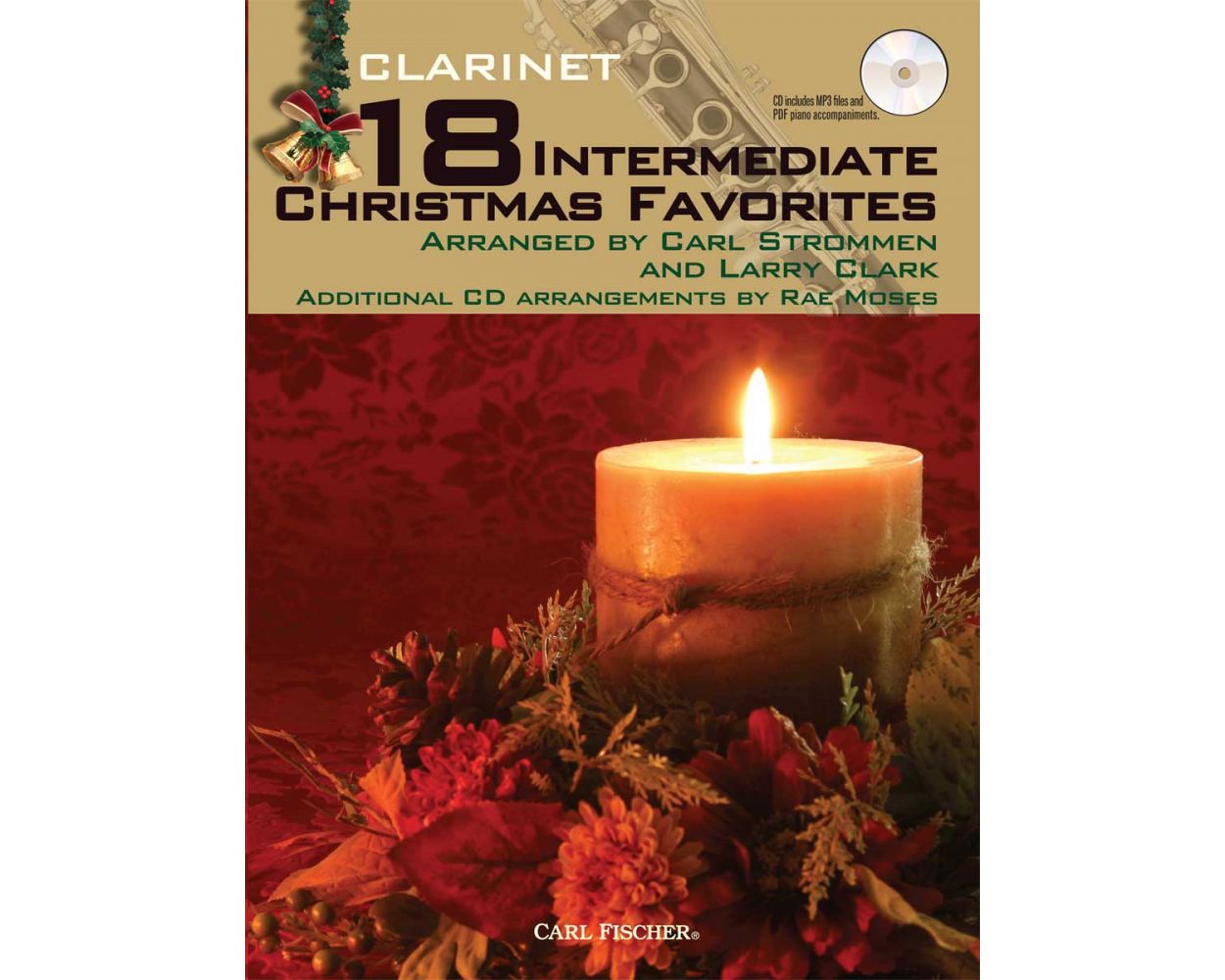
Instrumentalists searching for enjoyable new Christmas season material need look no further. This exciting new collection contains 18 popular holiday favorites in a variety of different styles, from classical, to jazz, to rock, to Latin. Each play-along track on the included CD uses background instruments that will make players feel like they are in the band or part of the orchestra. As an added bonus, the CD also contains printable PDF files of piano accompaniments for all songs, so that they may be performed in concert or at church. Features favorites such as “The First Noel,” “Joy to the World,” “O Little Town of Bethlehem,” “We Wish You a Merry Christmas,” and more. Veteran arrangers Carl Strommen and Larry Clark have teamed up to create this exceptional offering for instrumentalists of all ages looking to play some holiday music just for the fun of it!
Contents:
• Auld Lang Syne
• The First Noel
• God Rest Ye Merry, Gentlemen
• Go Tell It on the Mountain
• Greensleeves (What Child Is This?)
• Hark! The Herald Angels Sing
• Hey Man, Christmas Swings!
• Jingle Bells
• Jolly Old St. Nicholas
• Joy to the World
• O Come, All Ye Faithful ( Adeste Fideles)
• O Little Town of Bethlehem
• O Tannenbaum ( O Christmas Tree)
• Silent Night ( Inspired by Gymnopedie No. 1 by Erik Satie)
• Up on the Housetop
• Waltz of the Flowers from the Ballet The Nutcracker Suite
• We Three Kings
• We Wish You a Merry Christmas
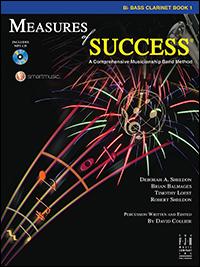
A Comprehensive Musicianship Band Method
Bass Clarinet
Measures of Success was created to ignite musical curiosity, to unite conceptual knowledge with performance skills, to foster understanding of the many ways that people share and interact with music, and to assess each student's continued musical growth.
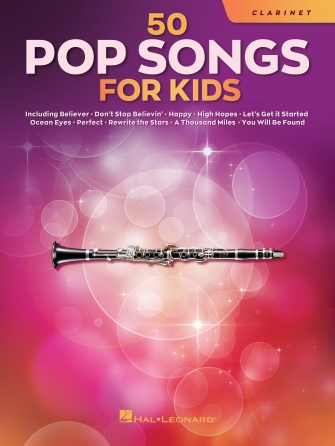
Clarinet
When kids learn to play an instrument, they want to play the songs they know and love! This collection of 50 songs alongs them to do just that! It includes 50 contemporary favorites.
Contents:
• Another One Bites The Dust
• Believer
• Call Me Maybe
• Can't Stop the Feeling!
• Dance Monkey
• Don't Fear the Reaper
• Don't Stop Believin'
• Everything is Awesome (Awesome Remixx!!!)
• Feel it Still
• Fight Song
• Forever Young
• Free Fallin'
• Hallelujah
• Happy
• High Hopes
• Hound Dog
• I Don't Care
• In the Air Tonight
• Into the Groove
• Into the Unknown
• Let it Be
• Let's Get it Started
• Louie, Louie
• The Middle
• A Million Dreams
• No Tears Left to Cry
• Ocean Eyes
• Old Town Road (Remix)
• Party in the U.S.A.
• Perfect
• Proud Mary
• Respect
• Rewrite the Stars
• Scars to Your Beautiful
• Spirit
• Sucker
• Surfin' U.S.A.
• Sweet Home Alabama
• A Thousand Miles
• Tomorrow
• Twist and Shout
• Viva La Vida
• We Are Never Ever Getting Back Together
• We Will Rock You
• What About Us
• Whatever it Takes
• Wish You Were Here
• Y.M.C.A.
• You Can Call Me Al
• You Will Be Found
Score and Parts
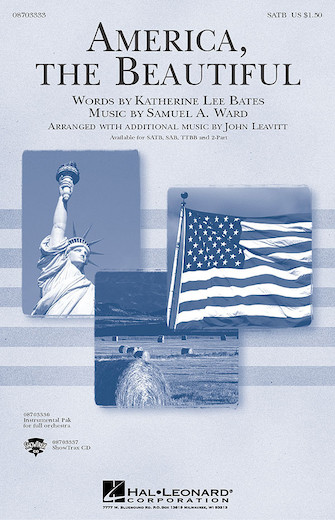
The beloved American hymn in a graceful and inspired setting includes an inspirational quotation by Abraham Lincoln. This arrangement by John Leavitt is ideal for many concert occasions.
Performance Time: Approx. 4:45.
Instrumentation:
• Full Score – 1
• B♭ Clarinet 1 – 1
• B♭ Clarinet 2 – 1
• Flute 1 – 1
• Flute 2 – 1
• Oboe 1 – 1
• Oboe 2 – 1
• Bassoon 1 – 1
• Bassoon 2 – 1
• Horn 1 in F – 1
• Horn 2 in F – 1
• C Trumpet 1 – 1
• C Trumpet 2 – 1
• C Trumpet 3 – 1
• Trombone 1 – 1
• Trombone 2 – 1
• Trombone 3 – 1
• Tuba – 1
• Timpani – 1
• Percussion 1 – 1
• Percussion 2 – 1
• Mallet Percussion – 1
• String Bass – 2
• Violin 1 – 4
• Violin 2 – 4
• Viola – 2
• Cello – 2
• Harp – 1
Flexible Arrangements for Multiple Combinations of Wind Instruments
Treble Clef/B-flat instruments: Clarinet, Trumpet, Baritone T.C., Tenor Saxophone
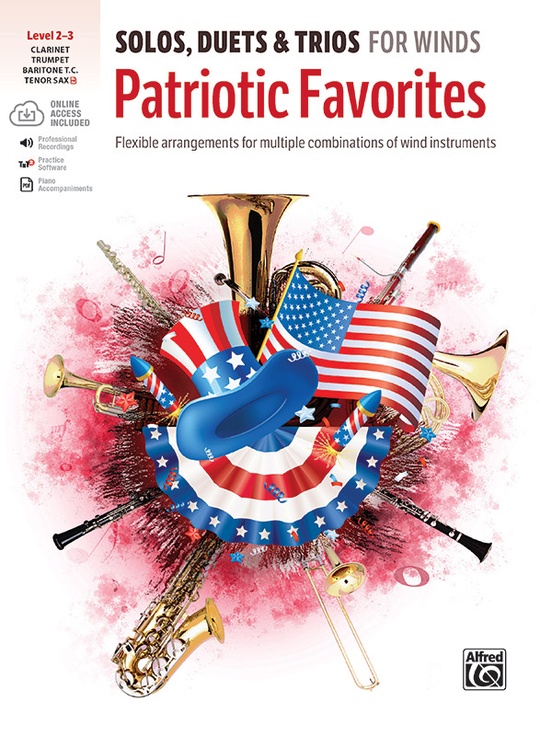
Adaptable and flexible to your unique needs, Solos, Duets & Trios for Winds is a versatile series that encourages playing in a variety of combinations. Featuring three written parts for every song, the arrangements are designed so that the top line is the melody (Part 1), the second line (Part 2) creates a duet, and the third line (Part 3) forms a trio. You can play solo parts alone or form small wind ensembles by mixing and matching instrumentation, as well as mixing the parts played. The accompanying online media includes fully orchestrated backing tracks, PDF files with piano accompaniments, and TNT 2 software, which features the ability to change the speed of the recordings without changing the pitch.
Contents:
• Amazing Grace
• America (My Country 'Tis of Thee)
• America the Beautiful
• Armed Forces Medley: The Army Goes Rolling Along • Marines' Hymn • Anchors Aweigh
• Battle Hymn of the Republic
• Columbia, the Gem of the Ocean
• Eternal Father, Strong to Save
• The Liberty Bell
• National Emblem
• Semper Fidelis
• The Stars and Stripes Forever
• The Star-Spangled Banner
• The Washington Post
• The Yankee Doodle Boy
• You're a Grand Old Flag
Presents 144 of the most frequently played tunes in old time fiddle contests as well as the most popular bluegrass, square dance and country tunes heard throughout the United States. The performance length arrangements of contest tunes include standard as well as challenging variations on hoe-downs, rags, polkas, show pieces, and waltzes complete with suggested accompaniment chords. This encyclopedia of fiddle tunes and variations spotlights American popular fiddle music as played by the great fiddlers of our time.
Contents:
• Ace of Spades
• Allentown Polka
• Angeline the Baker
• Arkansas Traveler
• Ashoken Farewell
• Back Up And Push
• Beaumont Rag
• Bill Cheatham
• Billy in the Lowground
• Bitter Creek
• Black And White Rag
• Black Eyed Suzie
• Black Mountain Rag
• Blackberry Blossom
• Boil Them Cabbage Down
• Bonaparte's Retreat
• Brilliancy
• Bully of the Town
• Calgary Polka
• Cattle in the Cane
• Champagne Polka
• Chancellor's Waltz
• Cherokee Shuffle
• Chicken Reel
• Chinky Pin
• Chinquapin
• Choctaw
• Cincinnati Rag
• Clarinet Polka
• Cottoneyed Joe
• Cottonpatch Rag
• Cripple Creek
• Cuckoo's Nest
• Did You Ever See the Devil, Uncle Joe?
• Dill Pickle Rag
• Don't Let Your Deal Go Down
• Done Gone
• Down Yonder
• Draggin' the Bow
• Durang's Hornpipe
• Durham's Bull
• Dusty Miller
• East Tennessee Blues
• Eighth of January
• Festival Waltz
• Fiddler's Dream
• Fiddler's Waltz
• Fifty Years Ago Waltz
• Fire on the Mountain
• Fireman's Reel
• Fisher's Hornpipe
• Flop Eared Mule
• Forked Deer
• Gardenia Waltz
• Gaudette Polka
• Georgianna Moon
• German Waltz
• Get Up John
• Golden Eagle Hornpipe
• Golden Slippers
• Goodbye Liza Jane
• Goodnight Waltz
• Grandfather Polka
• Grey Eagle
• Hell Among the Yearlings
• Herman's Rag
• Highland Hornpipe
• Home With the Girls in the Morning
• Hop Light Ladies
• Hotfoot
• I Don't Love Nobody
• Jack of Diamonds
• Jerusalem Ridge
• Jesse Polka
• Jolie Blonde
• Katy Hill
• Kelly's Waltz
• Leather Britches
• Lee Highway Blues
• Liberty
• Limerock
• Listen To the Mockingbird
• Little Beggarman
• Lone Star Rag
• Lonesome Fiddle Blues
• Lonesome John
• Lonesome Moonlight Waltz
• Lost Highway Blues
• Lost Indian
• Maidens Prayer
• Martin's Waltz
• Memory Waltz
• Midnight on the Water
• Miss Mcleod's Reel
• Mississippi Sawyer
• Old Joe Clark
• Over the Waterfall
• Over the Waves
• Paddy on the Turnpike
• Rachel
• Raggedy Ann
• Ragtime Annie
• Red Haired Boy
• Red Wing
• Road To Columbus
• Rose of Allenvale
• Rose of Sharon
• Roxanna Waltz
• Rubber Dolly
• Rye Straw
• Sail Away Ladies
• Sally Ann
• Sally Goodin
• Sally Johnson
• Salt River
• Say Old Man
• Snow Flake Reel
• Soldiers Joy
• Soppin' the Gravy
• St. Anne's Reel
• Star of the County Down
• Stone's Rag
• Stoney Point
• Sweetheart Schottische
• Temperence Reel
• Tennessee Wagoner
• Texas Schottische
• Tom And Jerry
• Tugboat
• Turkey in the Straw
• Twinkle Little Star
• Under the Double Eagle
• Wagoner
• Washington County
• Wednesday Night Waltz
• Westphalia Waltz
• Whiskey Before Breakfast
• Wild Fiddler's Rag
• Year of Jubilo
• Yellow Rose Waltz
Corrected, revised edition, incorporating newly discovered details from Barber's personal conducting copy. Includes extensive historical preface.
Form:
- Allegro
- Andante
- Presto in moto perpetuo
Barber provided these program notes for the premiere performance:
The first movement—allegro molto moderato—begins with a lyrical first subject announced at once by the solo violin, without any orchestral introduction. This movement as a whole has perhaps more the character of a sonata than concerto form. The second movement—andante sostenuto—is introduced by an extended oboe solo. The violin enters with a contrasting and rhapsodic theme, after which it repeats the oboe melody of the beginning. The last movement, a perpetuum mobile, exploits the more brilliant and virtuosic character of the violin.
The concerto is scored for two each of flutes, oboes, clarinets, bassoons, horns, and trumpets; timpani, snare drum, piano, and strings.
Print on Demand
Please allow an additional 10 to 14 days for processing and delivery.
Violin and Chamber Orchestra, Violin Part
Friedrich Seitz (1848-1918) was a professional German violinist and composer during the romantic era. He was concertmaster of the orchestra in Magdeburg, and later leader of the orchestra at the Court in Dessau. The beautiful melodies in his concertos offer young players the chance to use their bow technique for musical expression.
Skills required for this work:
– Left Hand: 1st position, basic double stops
– Right Hand: Detache, Legato, Spiccato
– Rhythms: Eighth Notes, Sixteenth Notes, Thirty Second Notes, Dotting Rhythms, Triplets
Instrumentation:
• Violin solo
• Flute (1)
• Oboe (2)
• Clarinet (2)
• Bassoon (2)
• Horn (2)
• Trumpet (2)
• Timpani (1)
• Violin 1 (9)
• Violin 2 (8)
• Viola (7)
• Cello (6)
• Bass (5)
Print on Demand
Please allow an additional 10 to 14 days for processing and delivery.
Full Score
Friedrich Seitz (1848-1918) was a professional German violinist and composer during the romantic era. He was concertmaster of the orchestra in Magdeburg, and later leader of the orchestra at the Court in Dessau. The beautiful melodies in his concertos offer young players the chance to use their bow technique for musical expression.
Skills required for this work:
– Left Hand: 1st position, basic double stops
– Right Hand: Detache, Legato, Spiccato
– Rhythms: Eighth Notes, Sixteenth Notes, Thirty Second Notes, Dotting Rhythms, Triplets
Instrumentation:
• Violin solo
• Flute (1)
• Oboe (2)
• Clarinet (2)
• Bassoon (2)
• Horn (2)
• Trumpet (2)
• Timpani (1)
• Violin 1 (9)
• Violin 2 (8)
• Viola (7)
• Cello (6)
• Bass (5)
Clarinet
This well-known romantic, melancholy melody by French composer Gabriel Fauré is now available for flute, clarinet, violin, viola, and cello.
The Pavane in F-sharp minor, Op. 50 was written in 1887. It was originally a piano piece, but is better known in Fauré's version for orchestra and optional chorus. It was first performed in Paris in 1888, becoming one of the composer's most popular works.