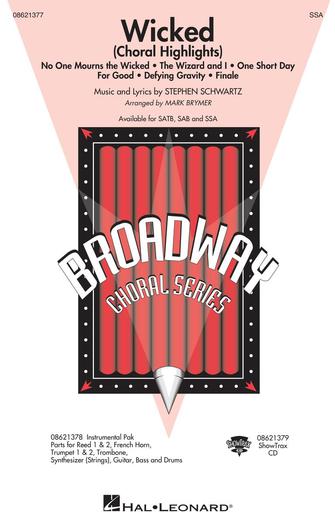
The new musical Wicked has taken Broadway by storm! Based on what happens before Dorothy arrives in Oz, this journey is fun for everyone. Includes: No One Mourns the Wicked, The Wizard and I, One Short Day, For Good, Defying Gravity, Finale.Available separately: SATB, SAB, SSA, Instrumental Pak (parts for Flute, Bb Clarinet/Bass Clarinet, French Horn, Trumpet 1 & 2, Trombone, Synthesizer (Strings), Guitar, Bass and Drums) and ShowTrax CD.
The 24 intermediate solos in this collection showcase a diverse array of composers who shaped their era's musical landscape. This compilation promises a rich and inspiring musical experience for developing players, exploring the music of notable writers (including ten women composers) such as Enrique Granados, Florence Price, Rentaro Taki, Samuel Coleridge-Taylor, and José White. While some key signatures and ranges have been changed to make each piece accessible, every effort has been made to preserve the spirit and integrity of the original work. In some pieces, optional cue-size notes in a different octave are included to facilitate ease of playing by the respective player and instrument. A piano accompaniment book is available to ensure a successful performance.
“Little Dance” is the fifth movement from David Maslanka's A Litany for Courage and the Seasons, scored for SATB Voices, Clarinet and Vibraphone. Composed in 1968, each of the six movements sets a different poem by Richard Beale. Maslanka wrote of this work: “Richard Beale's poetry grows out of the silence of the earth and the universe. Each poem rests on this silence and draws its power from it. Each of my six songs is finally a meditation on silence, a way of shaping the perception of the timeless ground.”
A poignant reminder of how music can resonate with our experiences and feelings, this work is a rewarding experience for both the performers and the audience.

This work for violin and piano by Martin Bresnick is a play on the words “suite” and “bittersweet.” Each of the four movements is based on a Yiddish folk song, which in English translate to On the Road, My Resting Place, Black Cat, and Dona, Dona. Each of the four pieces is primarily based on a Jewish folk song, but re-envisions them in a modern context, akin to Bartok and Kodaly. The composer noted, “I found it a very challenging, yet touching way to remain in contact with some part of my own past that I don’t usually reveal.” The title references the difficult (bitter) and pleasant (sweet) aspects of experiencing the tumultuous history of a people through their folk music.
Elgar: Romance op. 1, Clar Pno
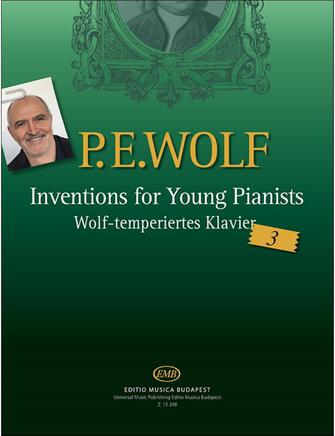
Peter Wolf (1947) studied classical piano and jazz piano at the Bela Bartok Secondary School under Kornel Zempleni, Ferenc Rados and Janos Gonda. In 2015 he obtained his DLA degree from the Franz Liszt Academy of Music with his thesis on jazz arrangements. In 1969 he became the keyboard-player of the band Ex Antiquis. He composed many hits of the 1970s and 1980s as well as scores for popular films and musicals. His virtuosity as an orchestrator was shown in concerts and albums of the Franz Liszt Chamber Orchestra; he also orchestrated violin pieces for Isaac Stern's ''Kreisler'' CD. In 1995 he was awarded the Fenyes Szabolcs Prize, in 2005 the Erkel Prize, and in 2018 Artisjus's Life Prize. In recent years he has had numerous large-scale compositions premiered by excellent performers: his two piano concertos and his concertos for oboe, clarinet, and violin respectively. About Inventions for Young Pianists, piano teacher Rita Znamenák writes: “This volume expressly aims at extending the repertoire of 3rd- and 4th-grade primary music students (and, of course, that of the older ones, too). Each of the 23 inventions expands and revolves around a musical idea. The short pieces inspire the children's imagination already with their titles. Teachers and student scan freely choose among pieces which require crossing hands, arpeggios, clusters, polyphony, syncopated rhythm, chromaticism, and pedalling. There are melodies with accompaniment, playing with alternate hands, playing legato and staccato, notes with appoggiaturas and acciaccaturas, jazz accents, and glissandi, too. The composer wrote unusual sound effects into a few pieces for the brave. It's my most sincere wish for young pianists that they find joy in studying Peter Wolf's works, and I encourage my colleagues to include pieces from this volume into their material: maybe students will also become more open to contemporary music through them.”
This tango has been recorded several times in a variety of arrangements, including for clarinet and piano. In fact, in this publication the cello and violin parts diverge, highlighting the strengths and possibilities in each instrument. The left hand of the piano is very rhythmic throughout, embracing the percussive, syncopated character of the tango. The right hand sometimes supports the rhythm, sometimes the harmony, and sometimes the melody, and there is a section without the string instrument where the pianist shines. Somewhat jazzy; highly chromatic but never atonal.
Contains Piano Score and separate Violin and Cello parts.
Master clarinet pedagogue Kalmen Opperman has drawn from over fifty years of teaching expertise to impart the most comprehensive collection of exercise, etudes, orchestral excerpts and solos to develop chromatic technique of clarinetists of all levels. This will certainly become the “bible” for clarinet study. The Clarinet Chromatic Machine is designed to facilitate the student’s ability to perform patterns constructed from the twelve notes of the chromatic scale.
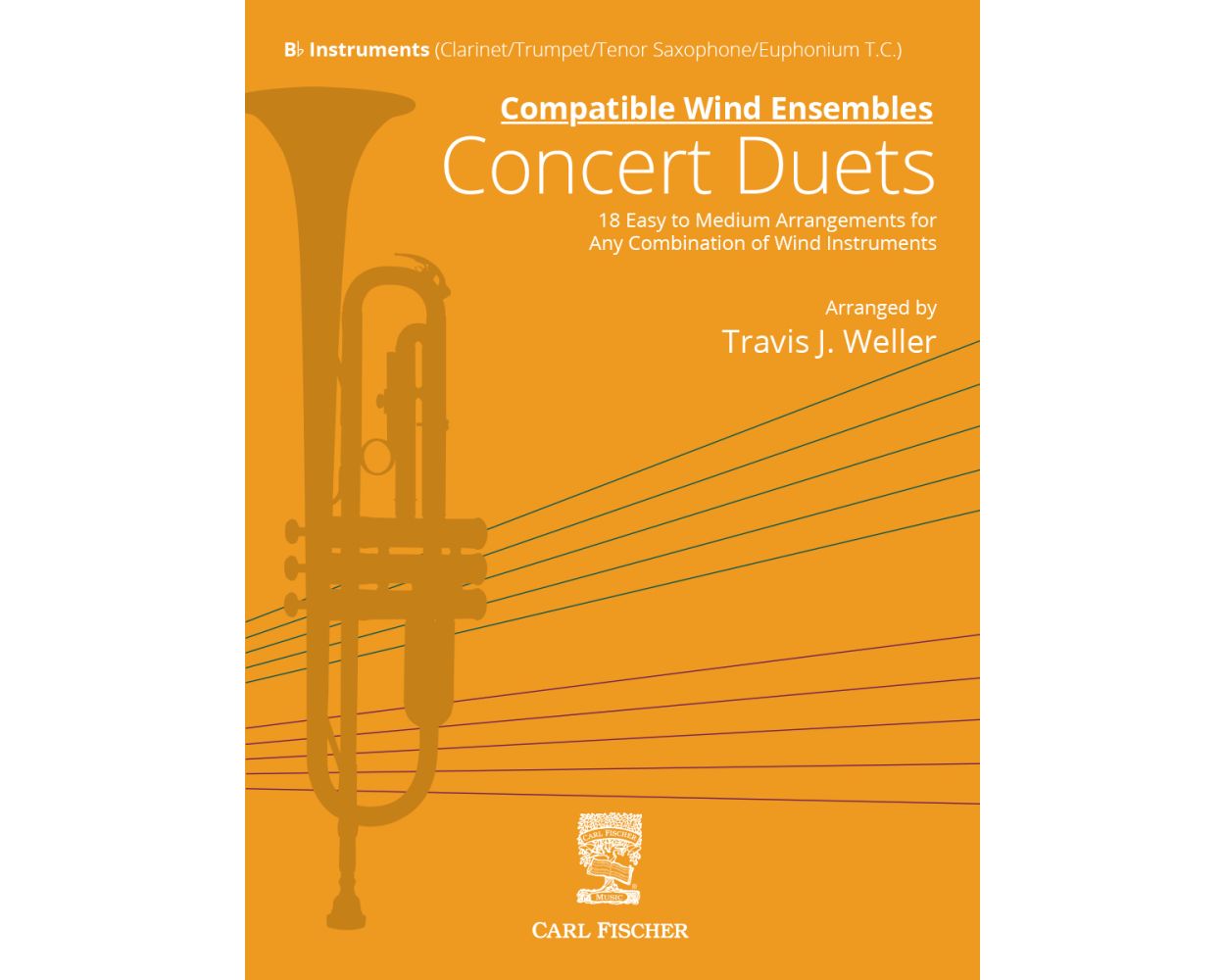
The 18 works contained in this collection have been carefully arranged for any combination of two wind instruments. Each work was selected for its quality, musical interest, and appropriateness in a chamber setting. They are set in a variety of developmentally appropriate key signatures, time signatures, and technical levels so that each line is on a similar level of ability. With these selections, students will learn to cooperate and connect with each other while playing music of different cultures, different styles, and different composers. Intended to foster individual musicianship and true collaboration, this collection will grow more intuitive musicians who confidently share their music with their communities.