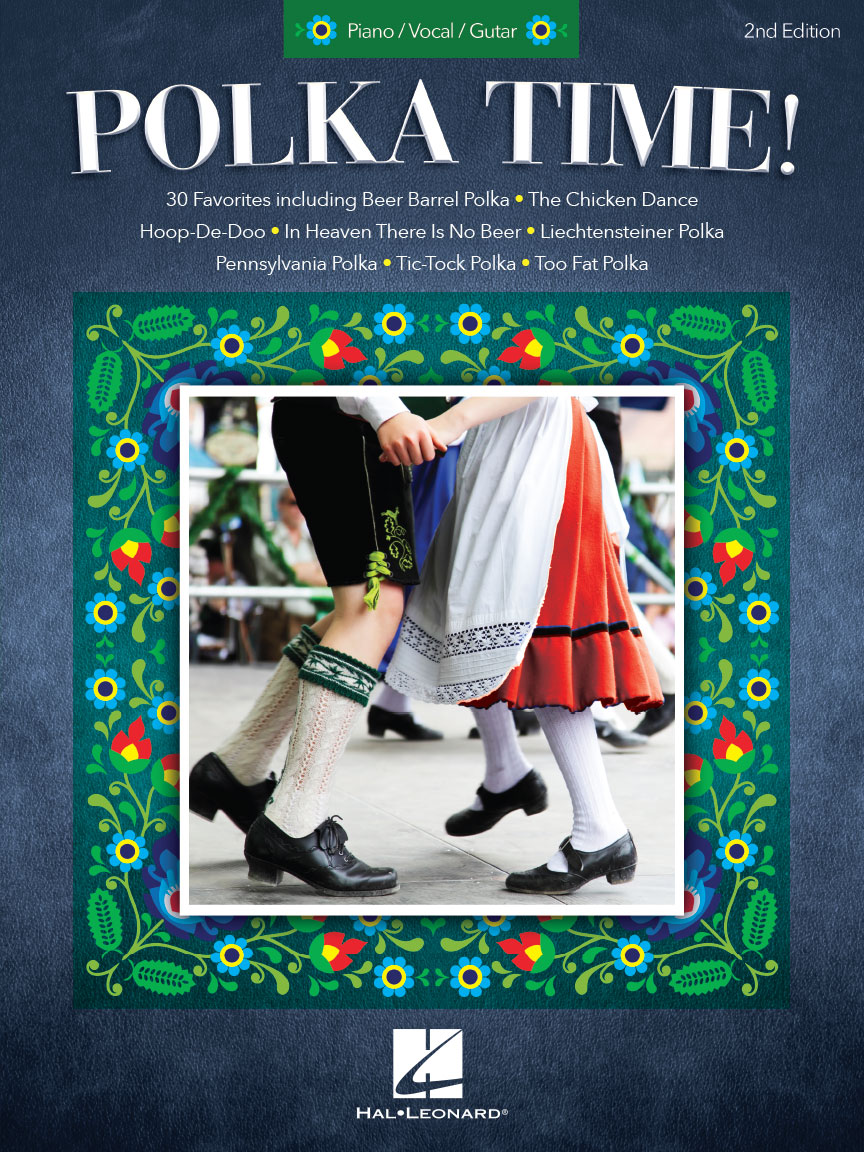
Polka Time! 30 Favorites (2nd Edition)

This second edition feature 30 favorites for piano, voice and guitar.

Contents:
• Barbara Polka
• Beer Barrel Polka (Roll Out The Barrel)
• The Chicken Dance
• Clarinet Polka
• Emilia Polka
• The Happy Wanderer (Val-de-ri Val-de-ra)
• Helena Polka
• Hoop-Dee-Doo
• Hop-scotch Polka
• In Heaven There Is No Beer
• Jenny Lind Polka
• Jolly Peter
• Julida Polka
• Just Another Polka
• Just Because
• Liechtensteiner Polka
• The Merry Christmas Polka
• (Put Another Nickel In) Music! Music! Music!
• My Melody Of Love
• No Beer Today
• Paloma Blanca
• Pennsylvania Polka
• Pizzicato Polka
• Red Wing Polka
• Schnitzelbank
• There Is A Tavern In The Town
• Tic-Tock Polka
• Tinker Polka
• Too Fat Polka (She's Too Fat For Me)
• Vict'ry Polka

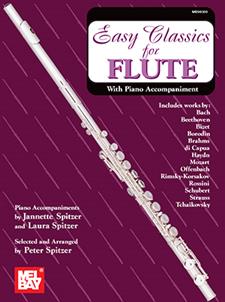
Easy Classics for Flute

The Easy Classics books were written to provide beginning to intermediate instrumentalists with an enjoyable introduction to some of the greatest classical melodies. A 39-page piano accompaniment is included for these 16 melodies by Beethoven, Bach, Bizet, Brahms, Mozart, Strauss, Rossini, Tchaikovsky, and others. Includes a 32-page pull-out part for the flute.

Contents:
• Adagio (from Clarinet Concerto, L.622) (by Wolfgang Amadeus Mozart)
• Cancan (from the opera Orpheus In the Underworld) (by Jacques Offenbach)
• Eine Kleine Nachtmusik (from Serenade K.525) (by Wolfgang Amadeus Mozart)
• Emperor Hymn (by Franz Joseph Haydn)
• Habanera (from the opera Carmen) (by Georges Bizet)
• Hungarian Dance #5 (by Johannes Brahms)
• Jesu, Joy Of Man's Desiring (from Cantata No.147) (by Johann Sebastian Bach)
• O Sole Mio (by Eduardo Di Capua)
• Ode to Joy (from Symphony #9) (by Ludwig Van Beethoven)
• Radetzky March (by Johann Strauss)
• Scheherazade (by Nicolai Rimsky-Korsakov)
• Sleeping Beauty Waltz (from the ballet Sleeping Beauty) (by Peter Ilyich Tchaikovsky)
• The Trout (by Franz Schubert)
• Theme from Polovetsian Dances (by Alexander Borodin)
• Toreador Song (from the opera Carmen) (by Georges Bizet)
• William Tell Overture (from the opera <William Tell) (by Gioachino Rossini)

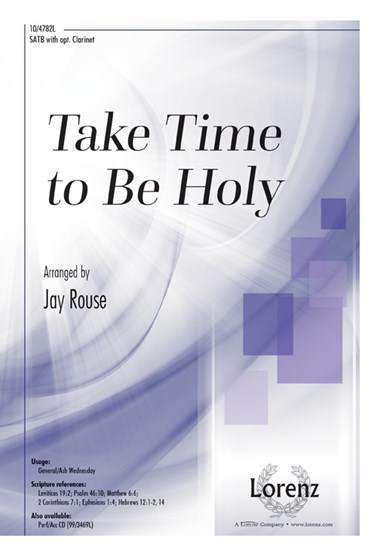
Take Time to Be Holy

SATB

This fresh setting of the treasured hymn will resonate with all who strive to seek God. Jay Rouse’s signature rich harmonies and inventive accompaniment enable these enduring words of faith to ring with hope and assurance.

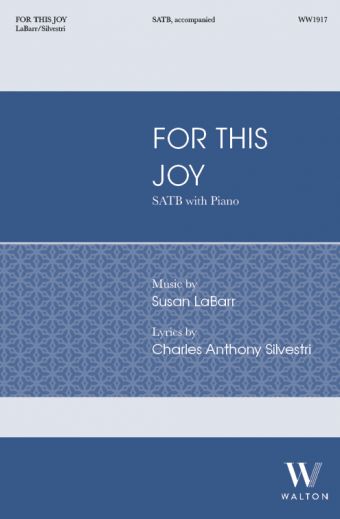
For This Joy

SATB

Written in memory of choral singer, clarinetist, and friend George Olin, this is a modern arrangement of the LOBE DEN HERREN hymn tune, with a new, ecumenical text written by poet Charles Anthony Silvestri. The text focuses on the richness of life and creation and the joy that is found in all aspects of life.

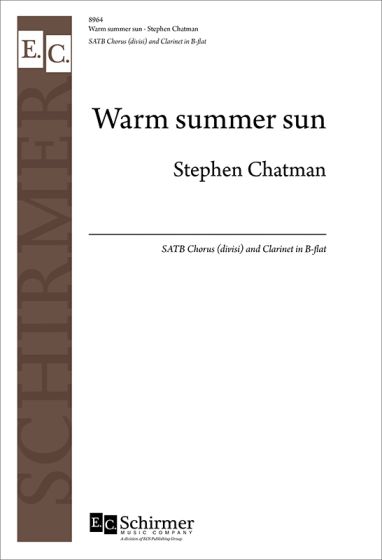
Warm summer sun

SATB

A sweet and comforting text by American writer Mark Twain. A beautiful and soothing clarinet part flows through the choral writing like a warm summer breeze.

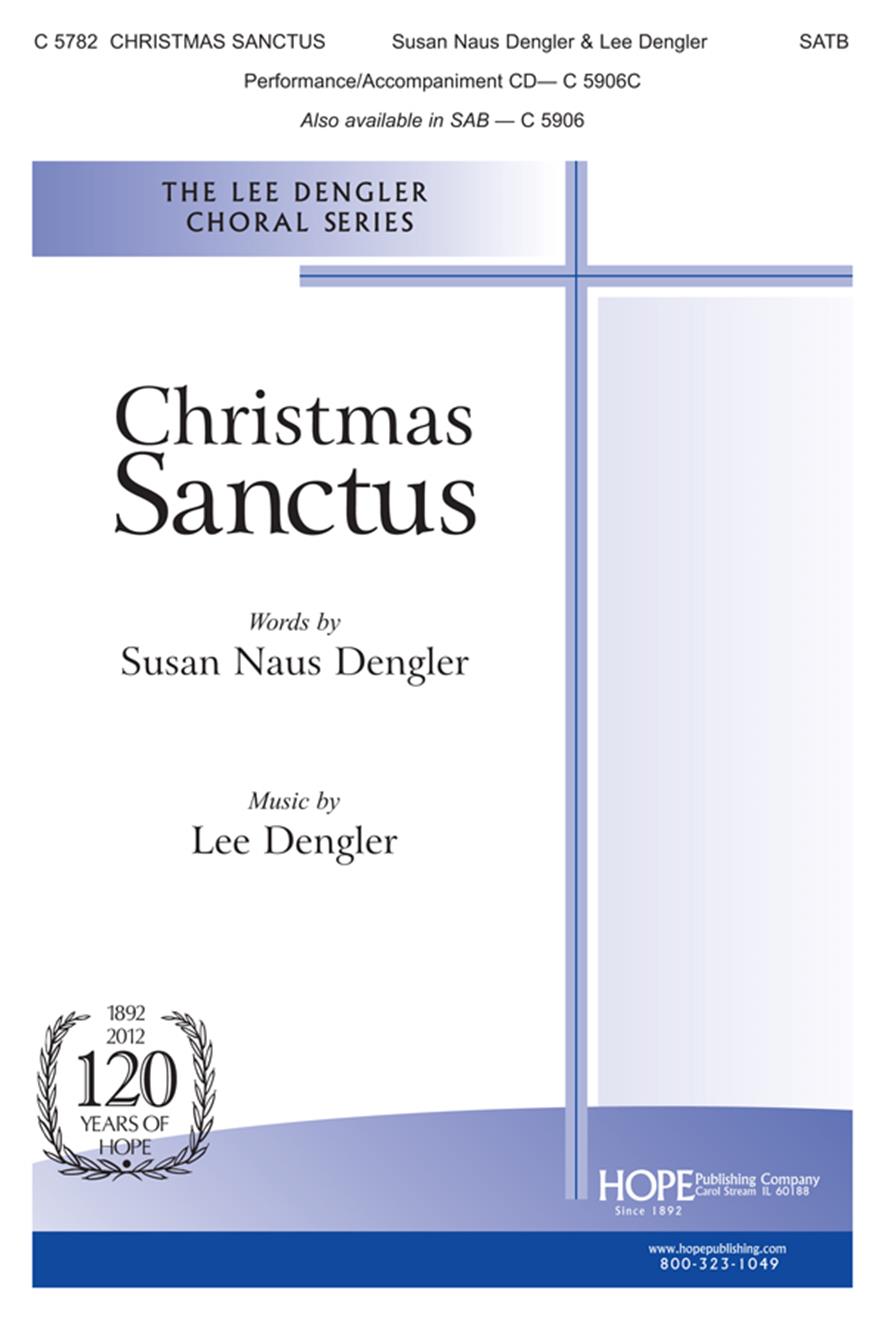
Christmas Sanctus

Orchestra Score and Parts

This Christmas text combines the tender beauty of the nativity story with the age old grandeur of the Sanctus. The music weds the simplicity of the stable in Bethlehem to a deeply worshipful exaltation of the promised Savior. It builds in intensity through the final refrain, with an optional soprano descant which enhances its brilliance and then ends with an intimate, quiet final statement reflecting the awe felt by all who experience Christ's presence on earth.

Scriptural Reference: Isaiah 6:3-4, Luke 2:14, Revelation 4:8

Orchestra Parts:

• Conductor's Score

• Flute

• Oboe (or Soprano Sax or Clarinet)

• Clarinet

• Horn (or Alto Sax or Clarinet)

• 2 Trumpets (or Alto Sax)

• 2 Trombones (or Tenor Sax or Baritone T.C.)

• Percussion

• Piano

• Violins 1 & 2

• Viola (or Clarinet)

• Cello/Bassoon (or Bass Clarinet)

• Double Bass

• String Reduction

Divine Encounter: III. The Blessing

The third movement of Craig Courtney’s trilogy, Divine Encounter, The Blessing is a newly-composed benediction based on Numbers 6:24-26. As Jesus blessed and multiplied the fish and bread, so God blesses the offering we bring to Him. The melody, which is one large-scale arc, is stated twice, creating a simple, sincere message of peace and rest. Suitable for use on its own, or as part of the three-movement work; effective in both worship and concert settings.

Divine Encounter
I. The Invitation
SATB

Brass Sextet
String Quartet
Orchestra
Alternate Piano Accompaniment
Accompaniment CD    

SSAA
Brass Sextet
String Quartet
Orchestra
Alternate Piano Accompaniment
Accompaniment CD    

TTBB
Brass Sextet
String Quartet
Orchestra
Alternate Piano Accompaniment
Accompaniment CD    

II. The Offering
SATB

Brass Sextet
String Quartet
Orchestra
Alternate Piano Accompaniment
Accompaniment CD    

SSAA
Brass Sextet
String Quartet
Orchestra
Alternate Piano Accompaniment
Accompaniment CD    

TTBB
Brass Sextet
String Quartet
Orchestra
Alternate Piano Accompaniment
Accompaniment CD    

III. The Blessing
SATB

Brass Sextet
String Quartet
Orchestra
Alternate Piano Accompaniment
Accompaniment CD    

SSAA
Brass Sextet
String Quartet
Orchestra
Alternate Piano Accompaniment
Accompaniment CD    

TTBB
Brass Sextet
String Quartet
Orchestra
Alternate Piano Accompaniment
Accompaniment CD    

*Optional instrument ensembles include a score and set of parts.
Brass Sextet includes 2 Trumpets, Horn, 2 Trombones, Bass Trombone
String Quartet includes 2 Violins, Viola, and Cello
Full Orchestra instrumentation for the complete Divine Encounter includes:

Flute, Oboe, B-flat Clarinet (2), Bassoon (2)
Horn (2), B-flat Trumpet (2)*, Trombone (2), Bass Trombone, Tuba*
Percussion (1-2 players: Crash Cymbals, Suspended Cymbals, Timpani)*
Harp**
Strings


*Movements 1 and 2 only
**Movements 1 and 3 only

 
The organ part (in the choral score), or the alternate piano part (available separately), is compatible with the full orchestration if the harp is not available.

Divine Encounter: II. The Offering

This regal, stately second movement of Craig Courtney’s trilogy, Divine Encounter, is based on Micah 6:6-8. As we partake of God's bounty, our gratitude urges us to offer ourselves as living sacrifices to serve God and people alike. Suitable for use on its own, or as part of the three-movement work; effective in both worship and concert settings.

Divine Encounter
I. The Invitation
SATB

Brass Sextet
String Quartet
Orchestra
Alternate Piano Accompaniment
Accompaniment CD    

SSAA
Brass Sextet
String Quartet
Orchestra
Alternate Piano Accompaniment
Accompaniment CD    

TTBB
Brass Sextet
String Quartet
Orchestra
Alternate Piano Accompaniment
Accompaniment CD    

II. The Offering
SATB

Brass Sextet
String Quartet
Orchestra
Alternate Piano Accompaniment
Accompaniment CD    

SSAA
Brass Sextet
String Quartet
Orchestra
Alternate Piano Accompaniment
Accompaniment CD    

TTBB
Brass Sextet
String Quartet
Orchestra
Alternate Piano Accompaniment
Accompaniment CD    

III. The Blessing
SATB

Brass Sextet
String Quartet
Orchestra
Alternate Piano Accompaniment
Accompaniment CD    

SSAA
Brass Sextet
String Quartet
Orchestra
Alternate Piano Accompaniment
Accompaniment CD    

TTBB
Brass Sextet
String Quartet
Orchestra
Alternate Piano Accompaniment
Accompaniment CD    

*Optional instrument ensembles include a score and set of parts.
Brass Sextet includes 2 Trumpets, Horn, 2 Trombones, Bass Trombone
String Quartet includes 2 Violins, Viola, and Cello
Full Orchestra instrumentation for the complete Divine Encounter includes:

Flute, Oboe, B-flat Clarinet (2), Bassoon (2)
Horn (2), B-flat Trumpet (2)*, Trombone (2), Bass Trombone, Tuba*
Percussion (1-2 players: Crash Cymbals, Suspended Cymbals, Timpani)*
Harp**
Strings


*Movements 1 and 2 only
**Movements 1 and 3 only

 
The organ part (in the choral score), or the alternate piano part (available separately), is compatible with the full orchestration if the harp is not available.
Piano Concerto No. 22 in E-flat Major, K. 482

Piano with Piano Reduction

Two copies are required for performance.

Composed at the end of 1785, Mozart's Piano Concerto in E-flat major forms a triumvirate with the two famous concerti in A major K. 488 and in C minor K. 491, which he completed in March of the following year. What they all have in common is Mozart's use of clarinets in the orchestra for the first time. In this he succeeded to particularly impressive effect with the lyrical passages in the slow sections of the E-flat-major concerto, which was well received by the audience at the first performance. Indeed, his father, Leopold, reports in a letter that Mozart “had to repeat” the Andante immediately. In addition to the study edition of this concerto, undeservedly overshadowed by its famous siblings, we are issuing the piano reduction, with cadenzas and fingerings by the magnificent Swiss pianist Alexander Lonquich.